


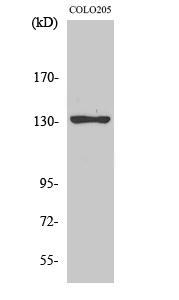
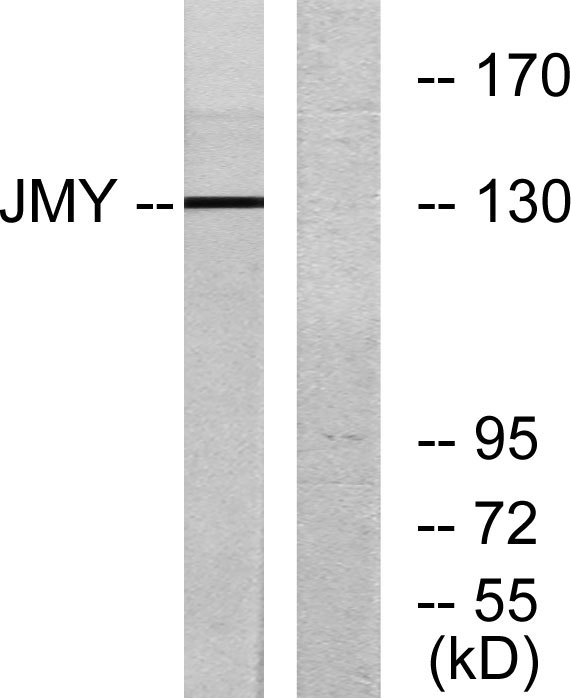
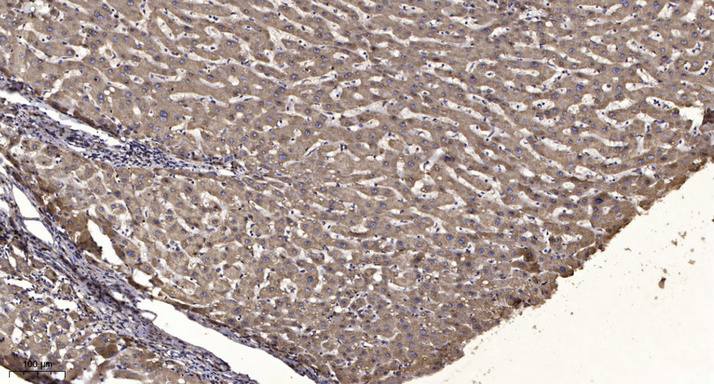

Anti-JMY antibody (931-980 aa) (STJ93803)
SPECIFICATIONS
ClonalityPolyclonal
HostRabbit
ConjugationUnconjugated
IsotypeIgG
ImmunogenThe antiserum was produced against synthesized peptide derived from the human JMY at the amino acid range 931-980
General Information
| Short Description | Rabbit polyclonal anti-Junction-mediating and-regulatory protein (931-980 aa) for use in WB, ELISA and IHC in Human and Mouse samples. Datasheet included with dilution recommendations, and related reagents. |
| Applications | WB/ELISA/IHC |
| Host | Rabbit |
| Reactivity | Human/Mouse |
| Note | STRICTLY FOR FURTHER SCIENTIFIC RESEARCH USE ONLY (RUO). MUST NOT TO BE USED IN DIAGNOSTIC OR THERAPEUTIC APPLICATIONS. |
Product Properties
| Clonality | Polyclonal |
| Isotype | IgG |
| Conjugation | Unconjugated |
| Concentration | 1 mg/mL |
| Purification | The antibody was affinity-purified from rabbit antiserum by affinity-chromatography using epitope-specific immunogen. |
| Dilution Range | WB 1:500-2000IHC-P 1:50-300ELISA 2000-20000 |
| Formulation | Liquid in PBS containing 50% Glycerol, 0.5% BSA and 0.02% Sodium Azide. |
| Storage Instruction | Store at-20°C for up to 1 year from the date of receipt, and avoid repeat freeze-thaw cycles. |
Target Information
| Gene Symbol | JMY |
| Gene ID | 133746 |
| Uniprot ID | JMY_HUMAN |
| Immunogen | The antiserum was produced against synthesized peptide derived from the human JMY at the amino acid range 931-980 |
| Immunogen Region | 931-980 aa |
| Specificity | JMY Polyclonal Antibody detects endogenous levels of JMY protein. |
Additional Info
| Function | Acts both as a nuclear p53/TP53-cofactor and a cytoplasmic regulator of actin dynamics depending on conditions. In nucleus, acts as a cofactor that increases p53/TP53 response via its interaction with p300/EP300. Increases p53/TP53-dependent transcription and apoptosis, suggesting an important role in p53/TP53 stress response such as DNA damage. In cytoplasm, acts as a nucleation-promoting factor for both branched and unbranched actin filaments. Activates the Arp2/3 complex to induce branched actin filament networks. Also catalyzes actin polymerization in the absence of Arp2/3, creating unbranched filaments. Contributes to cell motility by controlling actin dynamics. May promote the rapid formation of a branched actin network by first nucleating new mother filaments and then activating Arp2/3 to branch off these filaments. Upon nutrient stress, directly recruited by MAP1LC3B to the phagophore membrane surfaces to promote actin assembly during autophagy. The p53/TP53-cofactor and actin activator activities are regulated via its subcellular location. |
| Protein Name | Junction-Mediating And -Regulatory Protein |
| Database Links | Reactome: R-HSA-6804760 |
| Cellular Localisation | NucleusCytoplasmic VesicleCytoplasmCytoskeletonEndomembrane SystemLipid-AnchorAutophagosome MembraneLocalizes To The Nucleus In Most Cell TypesAccumulates In Nucleus Under Dna Damage ConditionsIncreasing P53/Tp53 Transcription Response And Reducing Its Influence On Cell MotilityIn Primary NeutrophilsIt Colocalizes With Actin Filaments At The Leading Edge And Is Excluded From The NucleusLocalization Correlates With MotilityBecause It Moves From The Nucleus To The Cytoplasmic Compartment When Cells Are Differentiated From Nonmotile Cells Into Highly Motile Neutrophil-Like CellsLocalizes To Cytoplasmic Vesicles Which Associate With Actin Filament And Autophagosomal Membranes Upon Starvation-Induced Autophagy |
| Alternative Antibody Names | Anti-Junction-Mediating And -Regulatory Protein antibodyAnti-JMY antibody |
Information sourced from Uniprot.org