


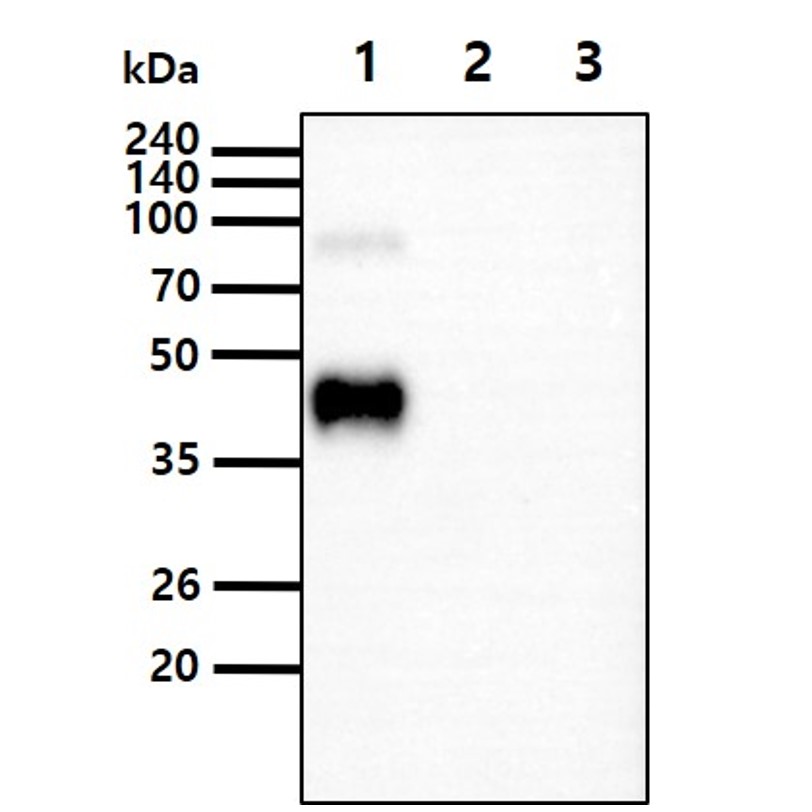
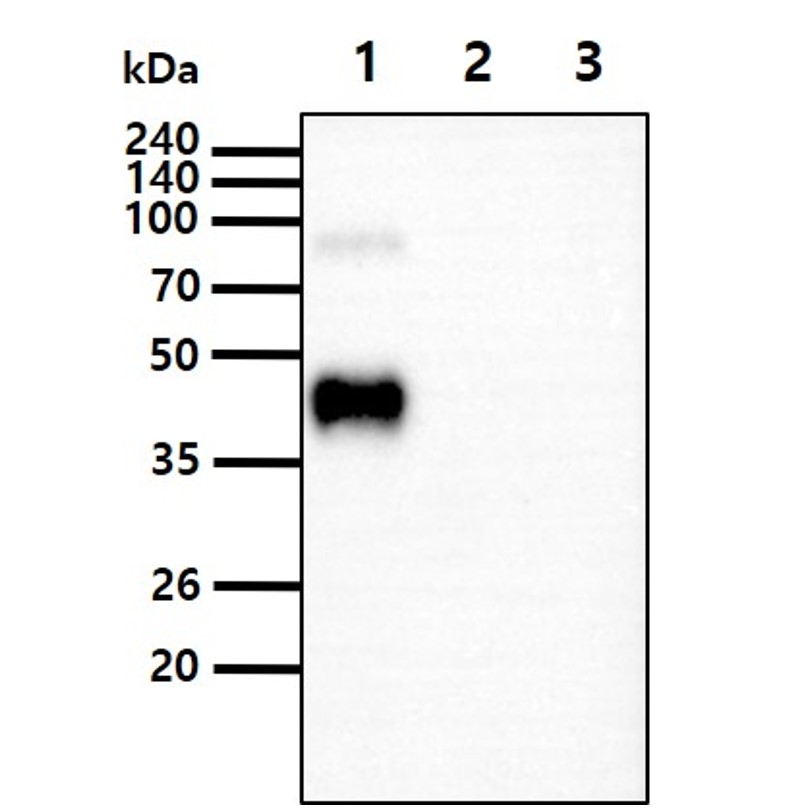

Anti-Influenza A H1N1 Hemagglutinin antibody (18-344aa) [AT1G7] (STJA0041934)
SPECIFICATIONS
ClonalityMonoclonal
HostMouse
ConjugationUnconjugated
IsotypeIgG1k
ImmunogenRecombinant Influenza A-H1N1/HA1 (18-344aa) purified from Baculovirus
General Information
| Short Description | Mouse monoclonal anti-Influenza A H1N1 Hemagglutinin (18-344aa) for use in ELISA and WB in Influenza A samples. Datasheet included with dilution recommendations, and related reagents. |
| Applications | ELISA/WB |
| Host | Mouse |
| Reactivity | Influenza A |
| Note | STRICTLY FOR FURTHER SCIENTIFIC RESEARCH USE ONLY (RUO). MUST NOT TO BE USED IN DIAGNOSTIC OR THERAPEUTIC APPLICATIONS. |
Product Properties
| Clonality | Monoclonal |
| Clone ID | AT1G7 |
| Isotype | IgG1k |
| Conjugation | Unconjugated |
| Concentration | 1 mg/mL |
| Purification | By protein-G affinity chromatography |
| Formulation | Liquid in phosphate-Buffered Saline (pH 7.4) with 0.02% Sodium Azide, 10% Glycerol |
| Storage Instruction | For short term storage, keep at +2C to +8C for up to 1 week. For long term storage, aliquot and store at-20C, and avoid repeat freeze-thaw cycles. |
Target Information
| Accession Number | ACV04238.1 |
| Immunogen | Recombinant Influenza A-H1N1/HA1 (18-344aa) purified from Baculovirus |
| Immunogen Region | 18-344aa |
Additional Info
| Background | Influenza virus, an enveloped virus of the Orthomyxoviridae family, has a unique capacity for genetic variation that is based in two molecular features of the virus family. First of all, the surface proteins of the virus are highly variable, able to mutate up to 50% of their amino acid sequence and still perform their functions in infection. Secondly, the viral genome is segmented, with eight RNA segments that are genetically independent of one another. In a mixed infection of different influenza genotypes, these segments can almost randomly reassort resulting in hybrid genotypes with some segments derived from one virus strain, while the other segments are derived from a second strain. |
Information sourced from Uniprot.org