
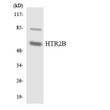


Anti-HTR2B antibody (15-64 aa) (STJ95763)
SPECIFICATIONS
ClonalityPolyclonal
HostRabbit
ConjugationUnconjugated
IsotypeIgG
ImmunogenThe antiserum was produced against synthesized peptide derived from the human HTR2B at the amino acid range 15-64
General Information
| Short Description | Rabbit polyclonal anti-5-hydroxytryptamine receptor 2B (15-64 aa) for use in WB, IF and ELISA in Human samples. Datasheet included with dilution recommendations, and related reagents. |
| Applications | WB/IF/ELISA |
| Host | Rabbit |
| Reactivity | Human |
| Note | STRICTLY FOR FURTHER SCIENTIFIC RESEARCH USE ONLY (RUO). MUST NOT TO BE USED IN DIAGNOSTIC OR THERAPEUTIC APPLICATIONS. |
Product Properties
| Clonality | Polyclonal |
| Isotype | IgG |
| Conjugation | Unconjugated |
| Concentration | 1 mg/mL |
| Purification | The antibody was affinity-purified from rabbit antiserum by affinity-chromatography using epitope-specific immunogen. |
| Dilution Range | WB 1:500-1:2000IF 1:200-1:1000ELISA 1:10000 |
| Formulation | Liquid in PBS containing 50% Glycerol, 0.5% BSA and 0.02% Sodium Azide. |
| Storage Instruction | Store at-20°C for up to 1 year from the date of receipt, and avoid repeat freeze-thaw cycles. |
Target Information
| Gene Symbol | HTR2B |
| Gene ID | 3357 |
| Uniprot ID | 5HT2B_HUMAN |
| Immunogen | The antiserum was produced against synthesized peptide derived from the human HTR2B at the amino acid range 15-64 |
| Immunogen Region | 15-64 aa |
| Specificity | SR-2B Polyclonal Antibody detects endogenous levels of SR-2B protein. |
Additional Info
| Function | G-protein coupled receptor for 5-hydroxytryptamine (serotonin). Also functions as a receptor for various ergot alkaloid derivatives and psychoactive substances. Ligand binding causes a conformation change that triggers signaling via guanine nucleotide-binding proteins (G proteins) and modulates the activity of downstream effectors. HTR2B is coupled to G(q)/G(11) G alpha proteins and activates phospholipase C-beta, releasing diacylglycerol (DAG) and inositol 1,4,5-trisphosphate (IP3) second messengers that modulate the activity of phosphatidylinositol 3-kinase and promote the release of Ca(2+) ions from intracellular stores, respectively. Beta-arrestin family members inhibit signaling via G proteins and mediate activation of alternative signaling pathways. Plays a role in the regulation of dopamine and 5-hydroxytryptamine release, 5-hydroxytryptamine uptake and in the regulation of extracellular dopamine and 5-hydroxytryptamine levels, and thereby affects neural activity. May play a role in the perception of pain. Plays a role in the regulation of behavior, including impulsive behavior. Required for normal proliferation of embryonic cardiac myocytes and normal heart development. Protects cardiomyocytes against apoptosis. Plays a role in the adaptation of pulmonary arteries to chronic hypoxia. Plays a role in vasoconstriction. Required for normal osteoblast function and proliferation, and for maintaining normal bone density. Required for normal proliferation of the interstitial cells of Cajal in the intestine. |
| Protein Name | 5-Hydroxytryptamine Receptor 2b5-Ht-2b5-Ht2bSerotonin Receptor 2b |
| Database Links | Reactome: R-HSA-390666Reactome: R-HSA-416476 |
| Cellular Localisation | Cell MembraneMulti-Pass Membrane ProteinSynapseSynaptosome |
| Alternative Antibody Names | Anti-5-Hydroxytryptamine Receptor 2b antibodyAnti-5-Ht-2b antibodyAnti-5-Ht2b antibodyAnti-Serotonin Receptor 2b antibodyAnti-HTR2B antibody |
Information sourced from Uniprot.org