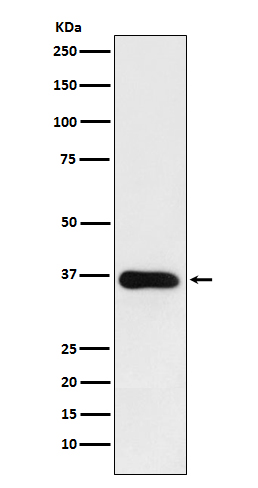
| Tissue Specificity | Widely expressed, highest expression in liver, lower in testis, ovary, lung, foreskin fibroblasts, and much lower in kidney. Expressed in liver (at protein level). Expressed in the basal cells of the corneal epithelium and in the ciliary nonpigmented epithelium (both at mRNA and at protein level). |
| Post Translational Modifications | Glycosylated. |
| Function | Controls the reversible conversion of biologically active glucocorticoids such as cortisone to cortisol, and 11-dehydrocorticosterone to corticosterone in the presence of NADP(H). Participates in the corticosteroid receptor-mediated anti-inflammatory response, as well as metabolic and homeostatic processes. Plays a role in the secretion of aqueous humor in the eye, maintaining a normotensive, intraocular environment. Bidirectional in vitro, predominantly functions as a reductase in vivo, thereby increasing the concentration of active glucocorticoids. It has broad substrate specificity, besides glucocorticoids, it accepts other steroid and sterol substrates. Interconverts 7-oxo- and 7-hydroxy-neurosteroids such as 7-oxopregnenolone and 7beta-hydroxypregnenolone, 7-oxodehydroepiandrosterone (3beta-hydroxy-5-androstene-7,17-dione) and 7beta-hydroxydehydroepiandrosterone (3beta,7beta-dihydroxyandrost-5-en-17-one), among others. Catalyzes the stereo-specific conversion of the major dietary oxysterol, 7-ketocholesterol (7-oxocholesterol), into the more polar 7-beta-hydroxycholesterol metabolite. 7-oxocholesterol is one of the most important oxysterols, it participates in several events such as induction of apoptosis, accumulation in atherosclerotic lesions, lipid peroxidation, and induction of foam cell formation. Mediates the 7-oxo reduction of 7-oxolithocholate mainly to chenodeoxycholate, and to a lesser extent to ursodeoxycholate, both in its free form and when conjugated to glycine or taurine, providing a link between glucocorticoid activation and bile acid metabolism. Catalyzes the synthesis of 7-beta-25-dihydroxycholesterol from 7-oxo-25-hydroxycholesterol in vitro, which acts as a ligand for the G-protein-coupled receptor (GPCR) Epstein-Barr virus-induced gene 2 (EBI2) and may thereby regulate immune cell migration. |
| Protein Name | 11-Beta-Hydroxysteroid Dehydrogenase 111-Dh11-Beta-Hsd17-Oxosteroid ReductaseCorticosteroid 11-Beta-Dehydrogenase Isozyme 1Short Chain Dehydrogenase/Reductase Family 26c Member 1 |
| Database Links | Reactome: R-HSA-194002Reactome: R-HSA-9757110 |
| Cellular Localisation | Endoplasmic Reticulum MembraneSingle-Pass Type Ii Membrane Protein |
| Alternative Antibody Names | Anti-11-Beta-Hydroxysteroid Dehydrogenase 1 antibodyAnti-11-Dh antibodyAnti-11-Beta-Hsd1 antibodyAnti-7-Oxosteroid Reductase antibodyAnti-Corticosteroid 11-Beta-Dehydrogenase Isozyme 1 antibodyAnti-Short Chain Dehydrogenase/Reductase Family 26c Member 1 antibodyAnti-HSD11B1 antibodyAnti-HSD11 antibodyAnti-HSD11L antibodyAnti-SDR26C1 antibody |
Information sourced from Uniprot.org