
![Anti-GPR68 nanobody [SAA1363] (STJN000277)](https://cdn11.bigcommerce.com/s-zso2xnchw9/images/stencil/124x110/products/200890/413072/STJN000277-SDS-PAGE-1__06828.1749232578.jpg?c=1 "Anti-GPR68 nanobody [SAA1363] (STJN000277)")
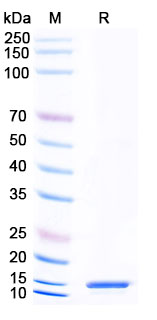
![Anti-GPR68 nanobody [SAA1363] (STJN000277)](https://cdn11.bigcommerce.com/s-zso2xnchw9/images/stencil/1280x1280/products/200890/413072/STJN000277-SDS-PAGE-1__06828.1749232578.jpg?c=1 "Anti-GPR68 nanobody [SAA1363] (STJN000277)")
Anti-GPR68 nanobody [SAA1363] (STJN000277)
SPECIFICATIONS
ClonalityMonoclonal
HostAlpaca
ConjugationUnconjugated
IsotypeVHH-8His-Cys-tag
General Information
| Short Description | Alpaca monoclonal nanobody anti-Ovarian Cancer G-Protein Coupled Receptor 1 is suitable for use in ELISA research applications. |
| Applications | ELISA |
| Host | Alpaca |
| Reactivity | Human |
| Note | STRICTLY FOR FURTHER SCIENTIFIC RESEARCH USE ONLY (RUO). MUST NOT BE USED IN DIAGNOSTIC OR THERAPEUTIC APPLICATIONS. |
Product Properties
| Clonality | Monoclonal |
| Clone ID | SAA1363 |
| Isotype | VHH-8His-Cys-tag |
| Conjugation | Unconjugated |
| Concentration | 1 mg/mL |
| Purification | Purified by Nickel column. |
| Formulation | 0.01M PBS, pH 7.4. |
| Storage Instruction | Use a manual defrost freezer and avoid repeated freeze-thaw cycles. Store at 4°C short term (1-2 weeks). Store at-20°C 12 months. Store at-80°C long term. |
Target Information
| Gene Symbol | GPR68 |
| Gene ID | 8111 |
| Uniprot ID | GPR68_HUMAN |
Additional Info
| Function | Proton-sensing G-protein coupled receptor activated by extracellular pH, which is required to monitor pH changes and generate adaptive reactions. The receptor is almost silent at pH 7.8 but fully activated at pH 6.8. Ligand binding causes a conformation change that triggers signaling via guanine nucleotide-binding proteins (G proteins) and modulates the activity of downstream effectors, such as phospholipase C. GPR68 is mainly coupled to G(q) G proteins and mediates production of diacylglycerol (DAG) and inositol 1,4,5-trisphosphate (IP3). Acts as a key mechanosensor of fluid shear stress and membrane stretch. Expressed in endothelial cells of small-diameter resistance arteries, where it mediates flow-induced dilation in response to shear stress. May represents an osteoblastic pH sensor regulating cell-mediated responses to acidosis in bone. Acts as a regulator of calcium-sensing receptor CASR in a seesaw manner: GPR68-mediated signaling inhibits CASR signaling in response to protons, while CASR inhibits GPR68 in presence of extracellular calcium. |
| Protein Name | G-Protein Coupled Receptor 68G-Protein Coupled Receptor 12aGpr12aOvarian Cancer G-Protein Coupled Receptor 1Ogr-1 |
| Database Links | Reactome: R-HSA-373076Reactome: R-HSA-416476 |
| Cellular Localisation | Cell MembraneMulti-Pass Membrane Protein |
| Alternative Nanobody Names | Anti-G-Protein Coupled Receptor 68 nanobodyAnti-G-Protein Coupled Receptor 12a nanobodyAnti-Gpr12a nanobodyAnti-Ovarian Cancer G-Protein Coupled Receptor 1 nanobodyAnti-Ogr-1 nanobodyAnti-GPR68 nanobodyAnti-OGR1 nanobody |
Information sourced from Uniprot.org