

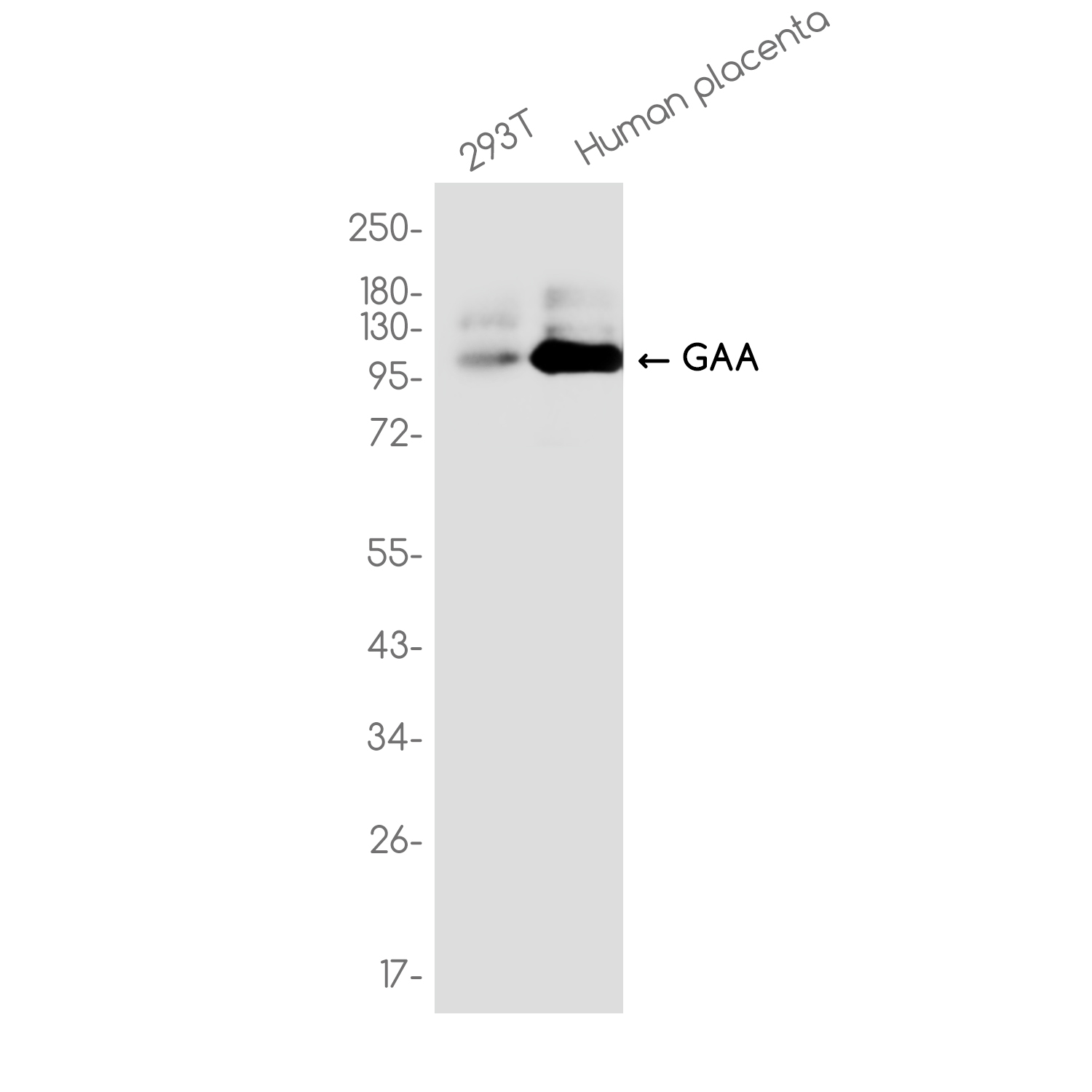

Anti-GAA antibody (STJA0037500)
SPECIFICATIONS
ClonalityMonoclonal
HostRabbit
ConjugationUnconjugated
IsotypeIgG
ImmunogenPeptide
General Information
| Short Description | Rabbit monoclonal anti-GAA for use in WB in Human, Mouse and Rat samples. Datasheet included with dilution recommendations, and related reagents. |
| Applications | WB |
| Host | Rabbit |
| Reactivity | Human/Mouse/Rat |
| Note | STRICTLY FOR FURTHER SCIENTIFIC RESEARCH USE ONLY (RUO). MUST NOT TO BE USED IN DIAGNOSTIC OR THERAPEUTIC APPLICATIONS. |
Product Properties
| Clonality | Monoclonal |
| Isotype | IgG |
| Conjugation | Unconjugated |
| Purification | Affinity Purified |
| Dilution Range | WB-1:1000-1:5000 |
| Formulation | Liquid in 50mM Tris-Glycine (pH 7.4) , 0.15M NaCl, 40%Glycerol, 0.01% sodium azide and 0.05% BSA. |
| Storage Instruction | Store at 4°C short term. Aliquot and store at-20°C long term. Avoid freeze/thaw cycles. |
Target Information
| Gene Symbol | GAA |
| Gene ID | 2548 |
| Uniprot ID | LYAG_HUMAN |
| Immunogen | Peptide |
Additional Info
| Post Translational Modifications | The different forms of acid glucosidase are obtained by proteolytic processing. Phosphorylation of mannose residues ensures efficient transport of the enzyme to the lysosomes via the mannose 6-phosphate receptor. |
| Function | Essential for the degradation of glycogen in lysosomes. Has highest activity on alpha-1,4-linked glycosidic linkages, but can also hydrolyze alpha-1,6-linked glucans. |
| Protein Name | Lysosomal Alpha-GlucosidaseAcid MaltaseAglucosidase Alfa Cleaved Into - 76 Kda Lysosomal Alpha-Glucosidase - 70 Kda Lysosomal Alpha-Glucosidase |
| Database Links | Reactome: R-HSA-5357609Reactome: R-HSA-6798695Reactome: R-HSA-70221 |
| Cellular Localisation | LysosomeLysosome Membrane |
| Alternative Antibody Names | Anti-Lysosomal Alpha-Glucosidase antibodyAnti-Acid Maltase antibodyAnti-Aglucosidase Alfa Cleaved Into - 76 Kda Lysosomal Alpha-Glucosidase - 70 Kda Lysosomal Alpha-Glucosidase antibodyAnti-GAA antibody |
Information sourced from Uniprot.org