


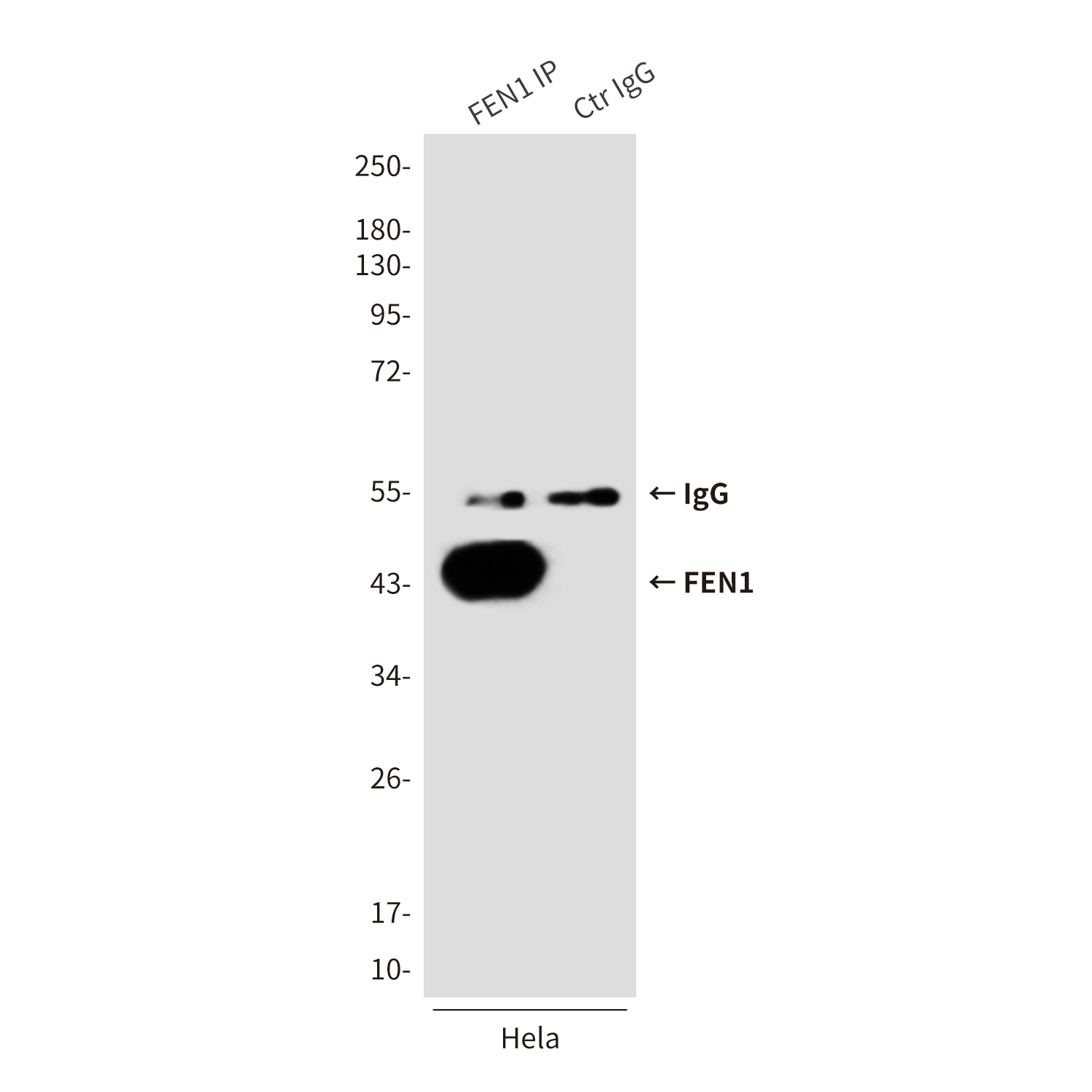
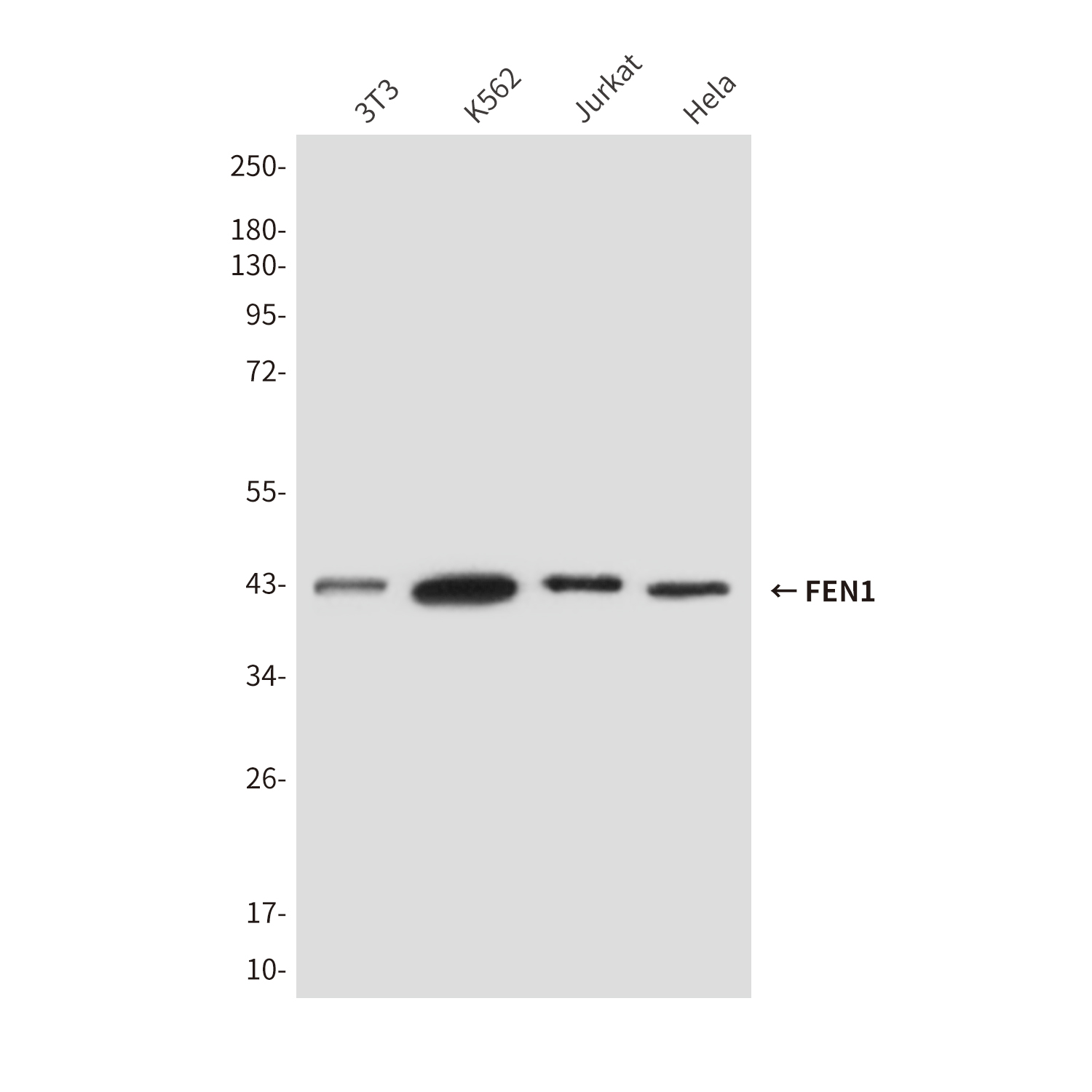

Anti-FEN1 antibody [1E7-A6-H6] (STJA0033228)
SPECIFICATIONS
ClonalityMonoclonal
HostMouse
ConjugationUnconjugated
IsotypeIgG1
ImmunogenPurified recombinant human FEN-1 protein fragments expressed in E.coli.
General Information
| Short Description | Mouse monoclonal anti-FEN1 for use in WB and IP in Human, Mouse and Rat samples. Datasheet included with dilution recommendations, and related reagents. |
| Applications | WB/IP |
| Host | Mouse |
| Reactivity | Human/Mouse/Rat |
| Note | STRICTLY FOR FURTHER SCIENTIFIC RESEARCH USE ONLY (RUO). MUST NOT TO BE USED IN DIAGNOSTIC OR THERAPEUTIC APPLICATIONS. |
Product Properties
| Clonality | Monoclonal |
| Clone ID | 1E7-A6-H6 |
| Isotype | IgG1 |
| Conjugation | Unconjugated |
| Concentration | 2.31 mg/mL |
| Purification | Affinity Purified |
| Dilution Range | WB 1:500-1:1000IP 1:20 |
| Formulation | Liquid in PBS containing 50% glycerol, 0.5% BSA and 0.02% sodium azide, pH 7.3. |
| Storage Instruction | Store at 4°C short term. Aliquot and store at-20°C long term. Avoid freeze/thaw cycles. |
Target Information
| Gene Symbol | FEN1 |
| Gene ID | 2237 |
| Uniprot ID | FEN1_HUMAN |
| Immunogen | Purified recombinant human FEN-1 protein fragments expressed in E.coli. |
Additional Info
| Post Translational Modifications | Acetylated by EP300. Acetylation inhibits both endonuclease and exonuclease activity. Acetylation also reduces DNA-binding activity but does not affect interaction with PCNA or EP300. Phosphorylation upon DNA damage induces relocalization to the nuclear plasma. Phosphorylation at Ser-187 by CDK2 occurs during late S-phase and results in dissociation from PCNA. Methylation at Arg-192 by PRMT5 impedes Ser-187 phosphorylation and increases interaction with PCNA. |
| Function | Structure-specific nuclease with 5'-flap endonuclease and 5'-3' exonuclease activities involved in DNA replication and repair. During DNA replication, cleaves the 5'-overhanging flap structure that is generated by displacement synthesis when DNA polymerase encounters the 5'-end of a downstream Okazaki fragment. It enters the flap from the 5'-end and then tracks to cleave the flap base, leaving a nick for ligation. Also involved in the long patch base excision repair (LP-BER) pathway, by cleaving within the apurinic/apyrimidinic (AP) site-terminated flap. Acts as a genome stabilization factor that prevents flaps from equilibrating into structures that lead to duplications and deletions. Also possesses 5'-3' exonuclease activity on nicked or gapped double-stranded DNA, and exhibits RNase H activity. Also involved in replication and repair of rDNA and in repairing mitochondrial DNA. |
| Protein Name | Flap Endonuclease 1Fen-1Dnase IvFlap Structure-Specific Endonuclease 1Maturation Factor 1Mf1Hfen-1 |
| Database Links | Reactome: R-HSA-110362Reactome: R-HSA-162594Reactome: R-HSA-174437Reactome: R-HSA-5651801Reactome: R-HSA-5685939Reactome: R-HSA-69166 |
| Cellular Localisation | Isoform 1: NucleusNucleolusNucleusNucleoplasmResides Mostly In The Nucleoli And Relocalizes To The Nucleoplasm Upon Dna DamageIsoform Fenmit: Mitochondrion |
| Alternative Antibody Names | Anti-Flap Endonuclease 1 antibodyAnti-Fen-1 antibodyAnti-Dnase Iv antibodyAnti-Flap Structure-Specific Endonuclease 1 antibodyAnti-Maturation Factor 1 antibodyAnti-Mf1 antibodyAnti-Hfen-1 antibodyAnti-FEN1 antibodyAnti-RAD2 antibody |
Information sourced from Uniprot.org