

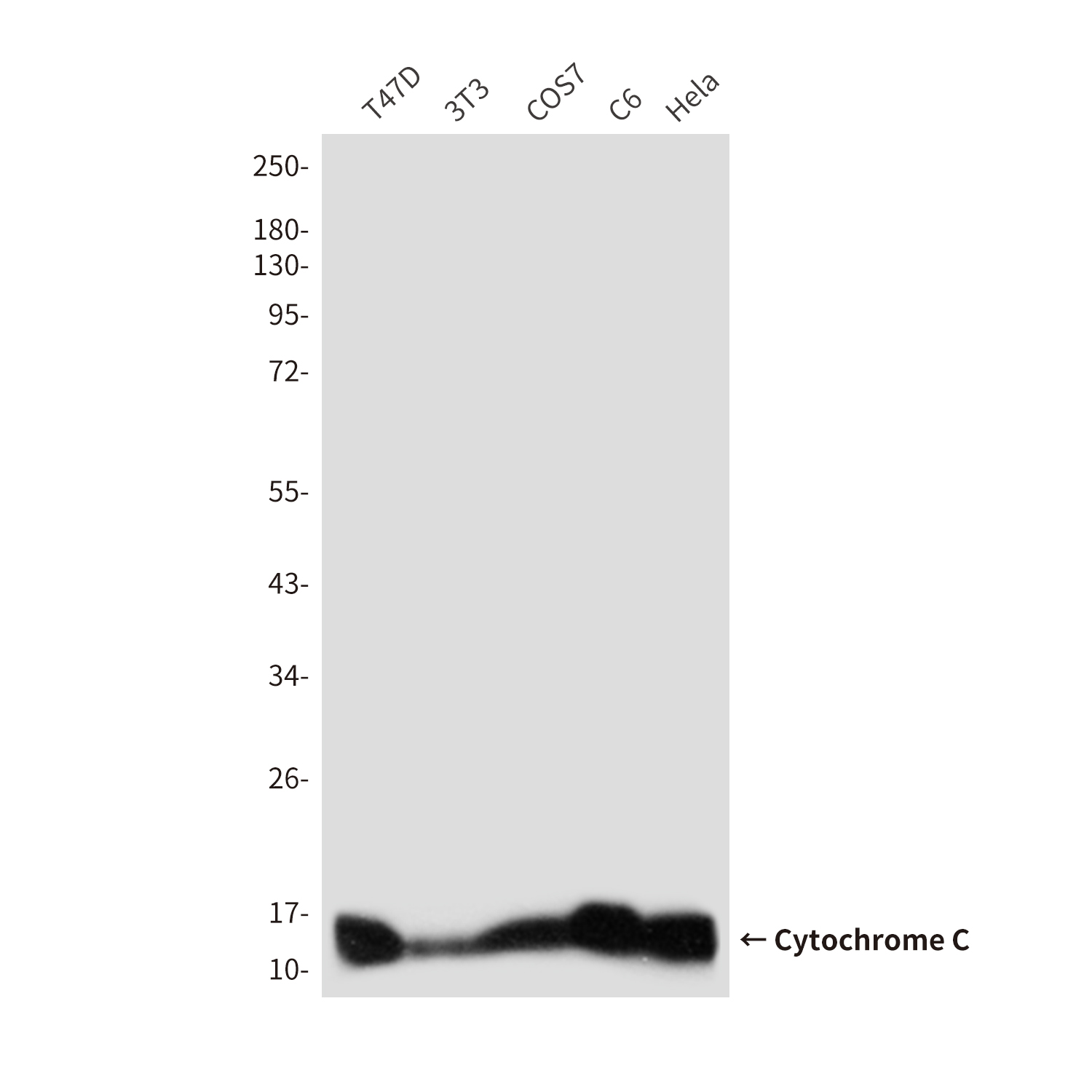
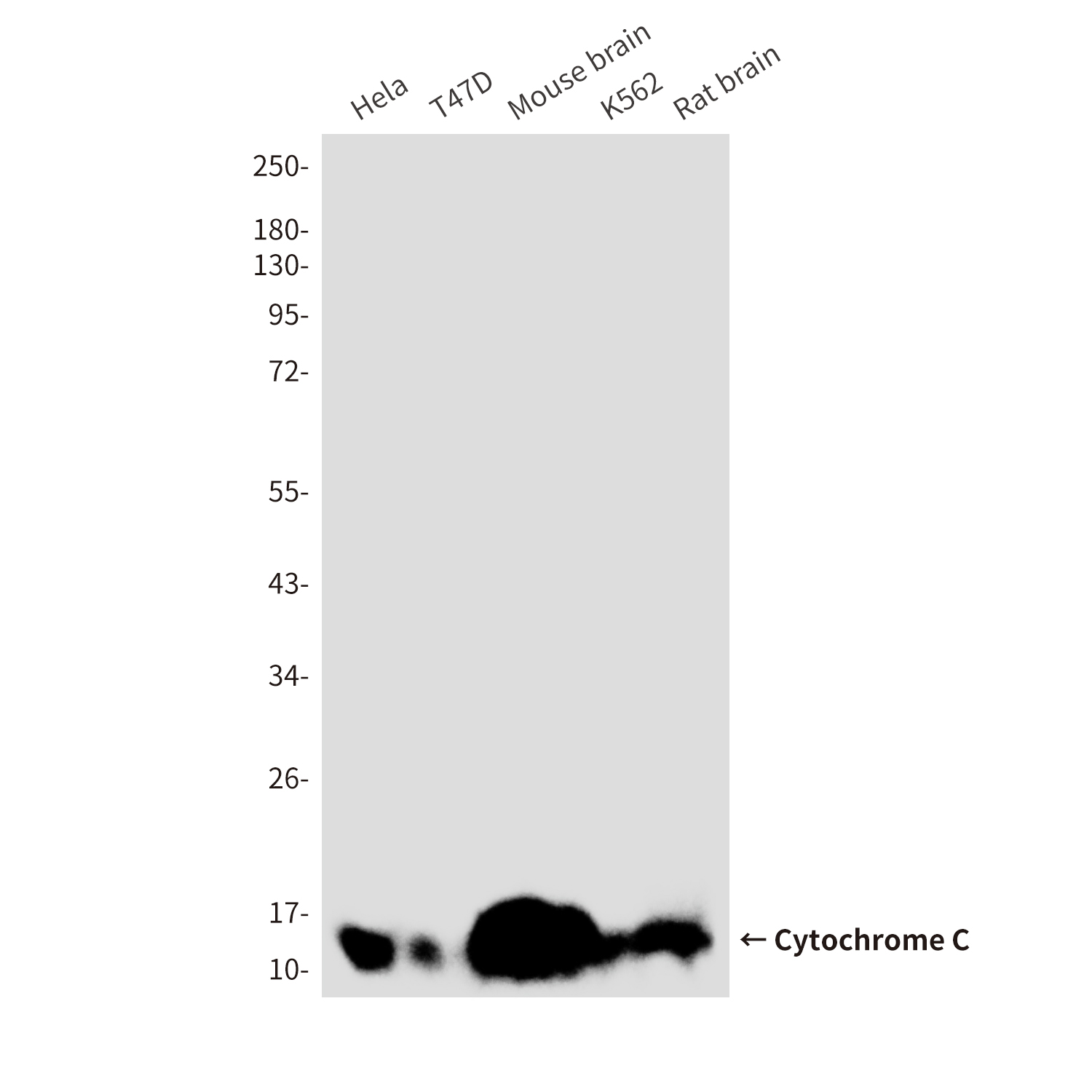
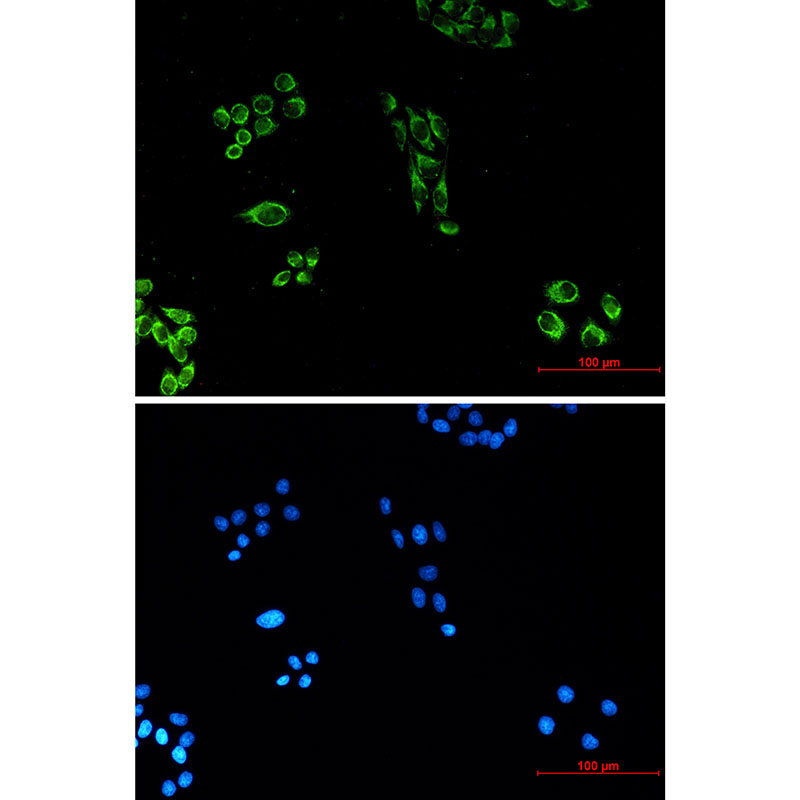
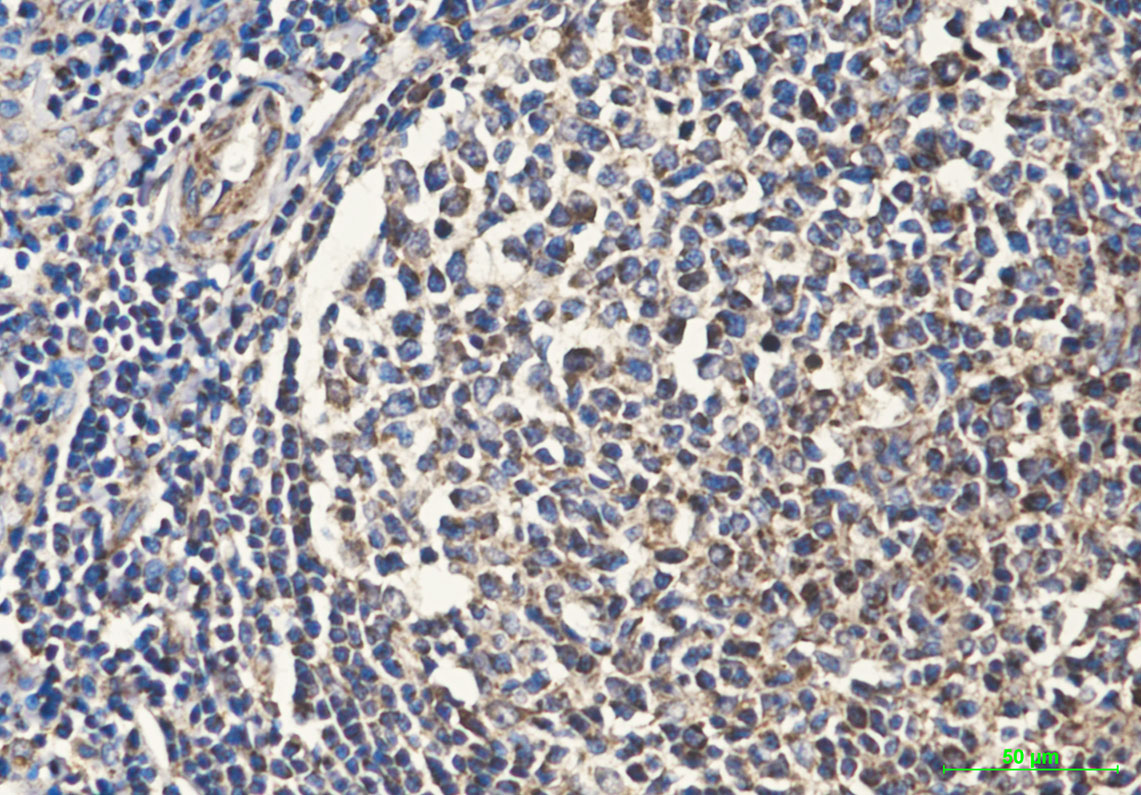

Anti-Cytochrome C antibody [7C10-3H3-9A3] (STJA0032831)
SPECIFICATIONS
ClonalityMonoclonal
HostMouse
ConjugationUnconjugated
IsotypeIgG1
ImmunogenRecombinant Protein of CYCS
General Information
| Short Description | Mouse monoclonal anti-Cytochrome C for use in WB, IHC-F, IHC-P, ICC and IF in Human, Mouse, Rat and Chicken samples. Datasheet included with dilution recommendations, and related reagents. |
| Applications | WB/IHC-F/IHC-P/ICC/IF |
| Host | Mouse |
| Reactivity | Human/Mouse/Rat/Chicken |
| Note | STRICTLY FOR FURTHER SCIENTIFIC RESEARCH USE ONLY (RUO). MUST NOT TO BE USED IN DIAGNOSTIC OR THERAPEUTIC APPLICATIONS. |
Product Properties
| Clonality | Monoclonal |
| Clone ID | 7C10-3H3-9A3 |
| Isotype | IgG1 |
| Conjugation | Unconjugated |
| Concentration | 1 mg/mL |
| Purification | Affinity Purified |
| Dilution Range | WB 1:500-1:1000IHC 1:50-1:100IF 1:50-1:200 |
| Formulation | Liquid in PBS containing 50% glycerol, 0.5% BSA and 0.02% sodium azide, pH 7.3. |
| Storage Instruction | Store at 4°C short term. Aliquot and store at-20°C long term. Avoid freeze/thaw cycles. |
Target Information
| Gene Symbol | CYCS |
| Gene ID | 54205 |
| Uniprot ID | CYC_HUMAN |
| Immunogen | Recombinant Protein of CYCS |
Additional Info
| Post Translational Modifications | Binds 1 heme c group covalently per subunit. Phosphorylation at Tyr-49 and Tyr-98 both reduce by half the turnover in the reaction with cytochrome c oxidase, down-regulating mitochondrial respiration. |
| Function | Electron carrier protein. The oxidized form of the cytochrome c heme group can accept an electron from the heme group of the cytochrome c1 subunit of cytochrome reductase. Cytochrome c then transfers this electron to the cytochrome oxidase complex, the final protein carrier in the mitochondrial electron-transport chain. Plays a role in apoptosis. Suppression of the anti-apoptotic members or activation of the pro-apoptotic members of the Bcl-2 family leads to altered mitochondrial membrane permeability resulting in release of cytochrome c into the cytosol. Binding of cytochrome c to Apaf-1 triggers the activation of caspase-9, which then accelerates apoptosis by activating other caspases. |
| Protein Name | Cytochrome C |
| Database Links | Reactome: R-HSA-111457Reactome: R-HSA-111458Reactome: R-HSA-111459Reactome: R-HSA-111463Reactome: R-HSA-111464Reactome: R-HSA-2151201Reactome: R-HSA-3299685Reactome: R-HSA-5620971Reactome: R-HSA-5628897Reactome: R-HSA-611105Reactome: R-HSA-9627069Reactome: R-HSA-9707564 |
| Cellular Localisation | Mitochondrion Intermembrane SpaceLoosely Associated With The Inner Membrane |
| Alternative Antibody Names | Anti-Cytochrome C antibodyAnti-CYCS antibodyAnti-CYC antibody |
Information sourced from Uniprot.org