



Anti-Complement C9 antibody [R04-1H2] (STJA0035813)
SPECIFICATIONS
ClonalityMonoclonal
HostRabbit
ConjugationUnconjugated
IsotypeIgG
ImmunogenA synthesized peptide derived from human C9
General Information
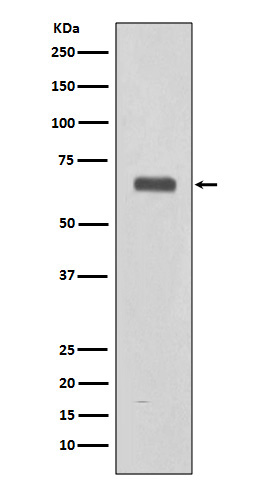
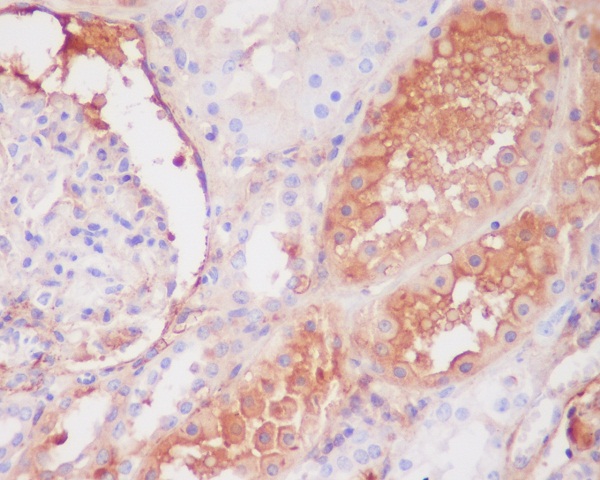
| Short Description | Rabbit monoclonal anti-Complement C9 for use in WB, IHC-P and IP in Human samples. Datasheet included with dilution recommendations, and related reagents. |
| Applications | WB/IHC-P/IP |
| Host | Rabbit |
| Reactivity | Human |
| Note | STRICTLY FOR FURTHER SCIENTIFIC RESEARCH USE ONLY (RUO). MUST NOT TO BE USED IN DIAGNOSTIC OR THERAPEUTIC APPLICATIONS. |
Product Properties
| Clonality | Monoclonal |
| Clone ID | R04-1H2 |
| Isotype | IgG |
| Conjugation | Unconjugated |
| Purification | Affinity Chromatography |
| Dilution Range | WB 1:500-1:1000IHC 1:50-1:100IP 1:50 |
| Formulation | Rabbit IgG in phosphate buffered saline, pH 7.4, 150mM NaCl, 0.02% sodium azide and 50% glycerol. |
| Storage Instruction | Store at 4°C short term. Aliquot and store at-20°C long term. Avoid freeze/thaw cycles. |
Target Information
| Gene Symbol | C9 |
| Gene ID | 735 |
| Uniprot ID | CO9_HUMAN |
| Immunogen | A synthesized peptide derived from human C9 |
Additional Info
| Tissue Specificity | Plasma (at protein level). |
| Post Translational Modifications | Thrombin cleaves factor C9 to produce C9a and C9b. Phosphorylation sites are present in the extracellular medium. Initially, positions and connectivity of disulfide bonds were based on peptide sequencing done for the human protein. The crystal structures for the human and mouse proteins corrected the positions and connectivities of the disulfide bonds. The distance between Cys-57 and Cys-94 in the monomeric mouse protein precludes formation of a disulfide bond, contrary to what is seen in the structure of the human polymeric form of the protein (Probable). |
| Function | Pore-forming component of the membrane attack complex (MAC), a multiprotein complex activated by the complement cascade, which inserts into a target cell membrane and forms a pore, leading to target cell membrane rupture and cell lysis. The MAC is initiated by proteolytic cleavage of C5 into complement C5b in response to the classical, alternative, lectin and GZMK complement pathways. The complement pathways consist in a cascade of proteins that leads to phagocytosis and breakdown of pathogens and signaling that strengthens the adaptive immune system. Constitutes the pore-forming subunit of the MAC complex: during MAC assembly, C9 associates with the C5b8 intermediate complex, and polymerizes to complete the pore. |
| Protein Name | Complement Component C9 Cleaved Into - Complement Component C9a - Complement Component C9b |
| Database Links | Reactome: R-HSA-166665Reactome: R-HSA-977606 |
| Cellular Localisation | SecretedTarget Cell MembraneMulti-Pass Membrane ProteinSecreted As Soluble MonomerOligomerizes At Target MembranesForming A Pre-PoreA Conformation Change Then Leads To The Formation Of A 100 Angstrom Diameter Pore |
| Alternative Antibody Names | Anti-Complement Component C9 Cleaved Into - Complement Component C9a - Complement Component C9b antibodyAnti-C9 antibody |
Information sourced from Uniprot.org