



Anti-COMMD7 antibody (1-200aa) [AT49B5] (STJA0041731)
SPECIFICATIONS
ClonalityMonoclonal
HostMouse
ConjugationUnconjugated
IsotypeIgG3k
ImmunogenRecombinant human COMMD7 (1-200aa) purified from E. coli
General Information
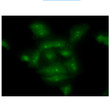
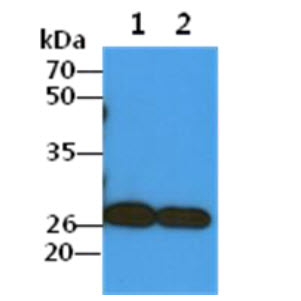
| Short Description | Mouse monoclonal anti-COMMD7 (1-200aa) for use in ELISA, WB, ICC and IF in Human samples. Datasheet included with dilution recommendations, and related reagents. |
| Applications | ELISA/WB/ICC/IF |
| Host | Mouse |
| Reactivity | Human |
| Note | STRICTLY FOR FURTHER SCIENTIFIC RESEARCH USE ONLY (RUO). MUST NOT TO BE USED IN DIAGNOSTIC OR THERAPEUTIC APPLICATIONS. |
Product Properties
| Clonality | Monoclonal |
| Clone ID | AT49B5 |
| Isotype | IgG3k |
| Conjugation | Unconjugated |
| Concentration | 1 mg/mL |
| Purification | By protein-A affinity chromatography |
| Formulation | Liquid in phosphate-Buffered Saline (pH 7.4) with 0.02% Sodium Azide, 10% Glycerol |
| Storage Instruction | For short term storage, keep at +2C to +8C for up to 1 week. For long term storage, aliquot and store at-20C, and avoid repeat freeze-thaw cycles. |
Target Information
| Gene Symbol | COMMD7 |
| Gene ID | 149951 |
| Uniprot ID | COMD7_HUMAN |
| Accession Number | NP_444269 |
| Immunogen | Recombinant human COMMD7 (1-200aa) purified from E. coli |
| Immunogen Region | 1-200aa |
Additional Info
| Tissue Specificity | Widely expressed with highest expression in lung. |
| Function | Scaffold protein in the commander complex that is essential for endosomal recycling of transmembrane cargos.the commander complex is composed of the CCC subcomplex and the retriever subcomplex. May modulate activity of cullin-RING E3 ubiquitin ligase (CRL) complexes. Associates with the NF-kappa-B complex and suppresses its transcriptional activity. |
| Protein Name | Comm Domain-Containing Protein 7 |
| Database Links | Reactome: R-HSA-8951664 |
| Cellular Localisation | Cytoplasmic Vesicle |
| Alternative Antibody Names | Anti-Comm Domain-Containing Protein 7 antibodyAnti-COMMD7 antibodyAnti-C20orf92 antibody |
Information sourced from Uniprot.org