


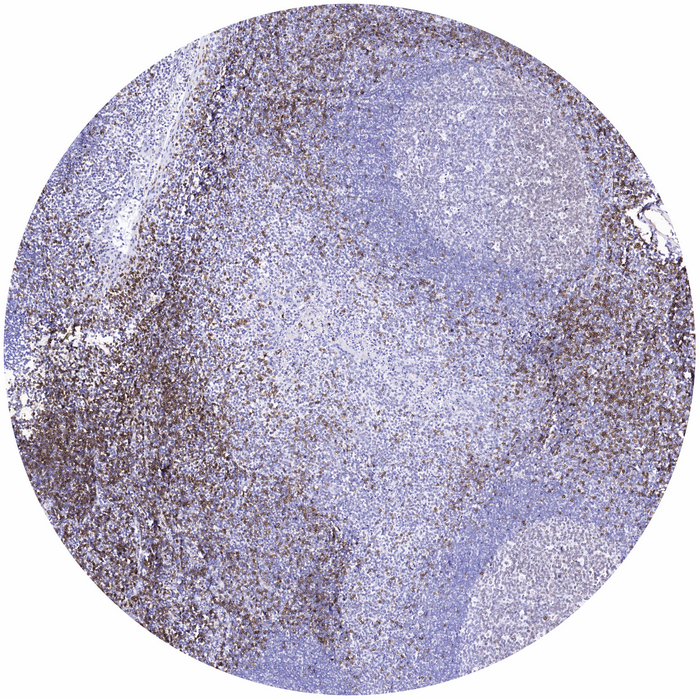
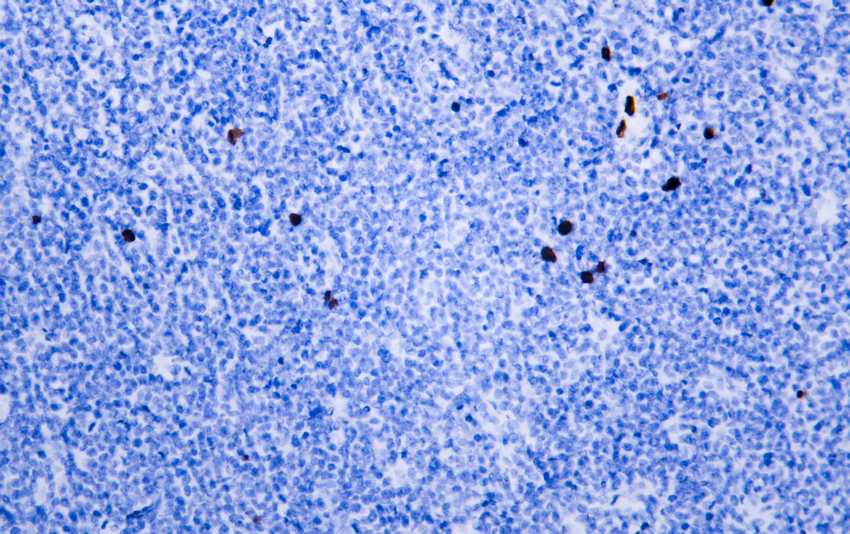
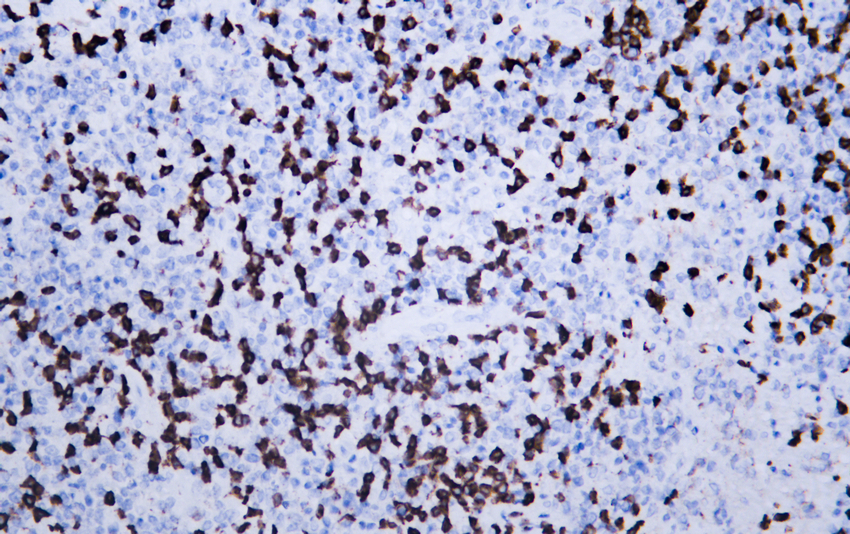
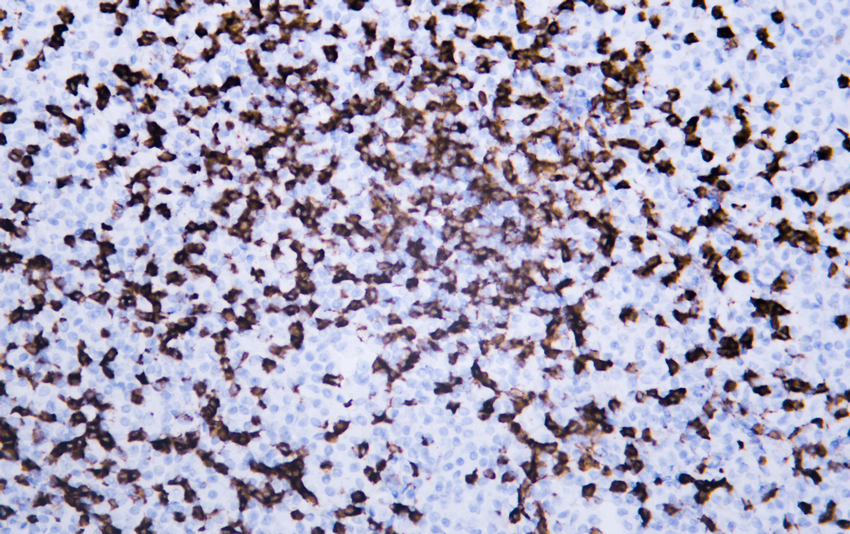


Anti-CD8A antibody (100-235 aa) [ABT155] (STJ197126)
SPECIFICATIONS
ClonalityMonoclonal
HostMouse
ConjugationUnconjugated
IsotypeIgG2ak
ImmunogenSynthesized peptide derived from the human CD8 a at the amino acid range 100-235
General Information
| Short Description | Mouse monoclonal anti-T-cell surface glycoprotein CD8 alpha chain (100-235 aa) for use in IHC, WB and IF in Human samples. Datasheet included with dilution recommendations, and related reagents. |
| Applications | IHC/WB/IF |
| Host | Mouse |
| Reactivity | Human |
| Note | STRICTLY FOR FURTHER SCIENTIFIC RESEARCH USE ONLY (RUO). MUST NOT TO BE USED IN DIAGNOSTIC OR THERAPEUTIC APPLICATIONS. |
Product Properties
| Clonality | Monoclonal |
| Clone ID | ABT155 |
| Isotype | IgG2ak |
| Conjugation | Unconjugated |
| Purification | The antibody was affinity-purified from mouse ascites by affinity-chromatography using specific immunogen. |
| Dilution Range | IHC-P 1:100-500WB 1:200-1000IF 1:100-500 |
| Formulation | Liquid in PBS containing 50% Glycerol, 0.5% BSA and 0.02% Sodium Azide. |
| Storage Instruction | Store at-20°C for up to 1 year from the date of receipt, and avoid repeat freeze-thaw cycles. |
Target Information
| Gene Symbol | CD8A |
| Gene ID | 925 |
| Uniprot ID | CD8A_HUMAN |
| Immunogen | Synthesized peptide derived from the human CD8 a at the amino acid range 100-235 |
| Immunogen Region | 100-235 aa |
| Specificity | The antibody can specifically recognize human CD8 protein, including two typies of dimer: Alpha Beta heterodimer or Alpha Alpha homodimer. |
Additional Info
| Post Translational Modifications | Palmitoylated, but association with CD8B seems to be more important for the enrichment of CD8A in lipid rafts. O-glycosylated. Phosphorylated in cytotoxic T-lymphocytes (CTLs) following activation. |
| Function | Integral membrane glycoprotein that plays an essential role in the immune response and serves multiple functions in responses against both external and internal offenses. In T-cells, functions primarily as a coreceptor for MHC class I molecule:peptide complex. The antigens presented by class I peptides are derived from cytosolic proteins while class II derived from extracellular proteins. Interacts simultaneously with the T-cell receptor (TCR) and the MHC class I proteins presented by antigen presenting cells (APCs). In turn, recruits the Src kinase LCK to the vicinity of the TCR-CD3 complex. LCK then initiates different intracellular signaling pathways by phosphorylating various substrates ultimately leading to lymphokine production, motility, adhesion and activation of cytotoxic T-lymphocytes (CTLs). This mechanism enables CTLs to recognize and eliminate infected cells and tumor cells. In NK-cells, the presence of CD8A homodimers at the cell surface provides a survival mechanism allowing conjugation and lysis of multiple target cells. CD8A homodimer molecules also promote the survival and differentiation of activated lymphocytes into memory CD8 T-cells. |
| Protein Name | T-Cell Surface Glycoprotein Cd8 Alpha ChainT-Lymphocyte Differentiation Antigen T8/Leu-2Cd Antigen Cd8a |
| Database Links | Reactome: R-HSA-198933 |
| Cellular Localisation | Isoform 1: Cell MembraneSingle-Pass Type I Membrane ProteinCd8a Localizes To Lipid Rafts Only When Associated With Its Partner Cd8bIsoform 2: Secreted |
| Alternative Antibody Names | Anti-T-Cell Surface Glycoprotein Cd8 Alpha Chain antibodyAnti-T-Lymphocyte Differentiation Antigen T8/Leu-2 antibodyAnti-Cd Antigen Cd8a antibodyAnti-CD8A antibodyAnti-MAL antibody |
Information sourced from Uniprot.org