


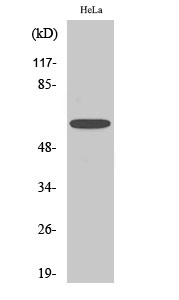
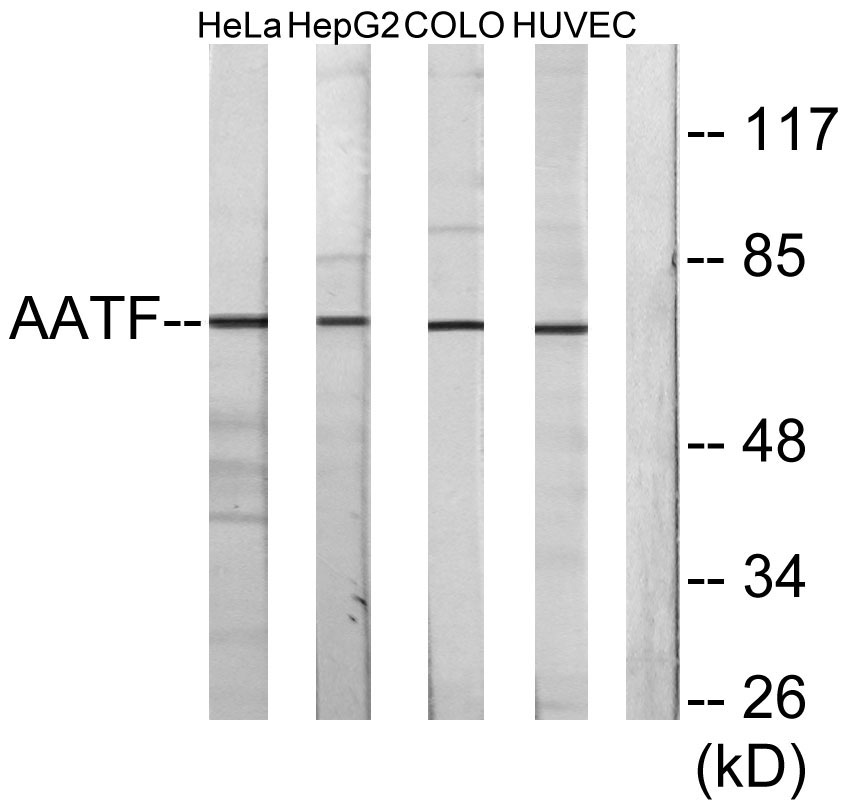
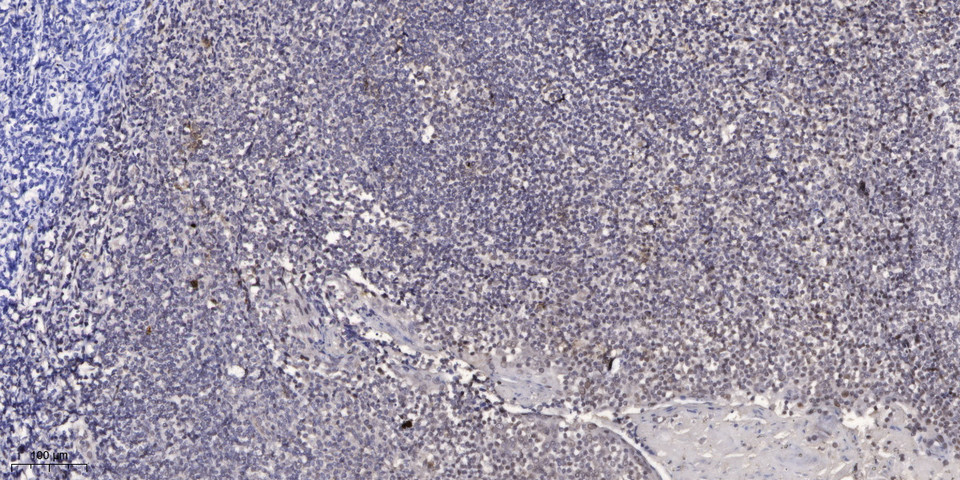

Anti-AATF antibody (10-59 aa) (STJ92259)
SPECIFICATIONS
ClonalityPolyclonal
HostRabbit
ConjugationUnconjugated
IsotypeIgG
ImmunogenThe antiserum was produced against synthesized peptide derived from the human the amino acidTF at the amino acid range 10-59
General Information
| Short Description | Rabbit polyclonal anti-Protein AATF (10-59 aa) for use in WB, IHC, IF and ELISA in Human, Mouse and Rat samples. Datasheet included with dilution recommendations, and related reagents. |
| Applications | WB/IHC/IF/ELISA |
| Host | Rabbit |
| Reactivity | Human/Mouse/Rat |
| Note | STRICTLY FOR FURTHER SCIENTIFIC RESEARCH USE ONLY (RUO). MUST NOT TO BE USED IN DIAGNOSTIC OR THERAPEUTIC APPLICATIONS. |
Product Properties
| Clonality | Polyclonal |
| Isotype | IgG |
| Conjugation | Unconjugated |
| Concentration | 1 mg/mL |
| Purification | The antibody was affinity-purified from rabbit antiserum by affinity-chromatography using epitope-specific immunogen. |
| Dilution Range | WB 1:500-1:2000IHC 1:100-1:300ELISA 1:10000IF 1:50-200 |
| Formulation | Liquid in PBS containing 50% Glycerol, 0.5% BSA and 0.02% Sodium Azide. |
| Storage Instruction | Store at-20°C for up to 1 year from the date of receipt, and avoid repeat freeze-thaw cycles. |
Target Information
| Gene Symbol | AATF |
| Gene ID | 26574 |
| Uniprot ID | AATF_HUMAN |
| Immunogen | The antiserum was produced against synthesized peptide derived from the human the amino acidTF at the amino acid range 10-59 |
| Immunogen Region | 10-59 aa |
| Specificity | Che-1 Polyclonal Antibody detects endogenous levels of Che-1 protein. |
Additional Info
| Post Translational Modifications | Hyperphosphorylated during the G1/S phase transition. |
| Function | Part of the small subunit (SSU) processome, first precursor of the small eukaryotic ribosomal subunit. During the assembly of the SSU processome in the nucleolus, many ribosome biogenesis factors, an RNA chaperone and ribosomal proteins associate with the nascent pre-rRNA and work in concert to generate RNA folding, modifications, rearrangements and cleavage as well as targeted degradation of pre-ribosomal RNA by the RNA exosome. May function as a general inhibitor of the histone deacetylase HDAC1. Binding to the pocket region of RB1 may displace HDAC1 from RB1/E2F complexes, leading to activation of E2F target genes and cell cycle progression. Conversely, displacement of HDAC1 from SP1 bound to the CDKN1A promoter leads to increased expression of this CDK inhibitor and blocks cell cycle progression. Also antagonizes PAWR mediated induction of aberrant amyloid peptide production in Alzheimer disease (presenile and senile dementia), although the molecular basis for this phenomenon has not been described to date. |
| Protein Name | Protein AatfApoptosis-Antagonizing Transcription FactorRb-Binding Protein Che-1 |
| Database Links | Reactome: R-HSA-193648 |
| Cellular Localisation | NucleusNucleolus |
| Alternative Antibody Names | Anti-Protein Aatf antibodyAnti-Apoptosis-Antagonizing Transcription Factor antibodyAnti-Rb-Binding Protein Che-1 antibodyAnti-AATF antibodyAnti-CHE1 antibodyAnti-DED antibodyAnti-HSPC277 antibody |
Information sourced from Uniprot.org