

Mouse PGP9.5/UCHL1 protein (Recombinant) (His-Tag) (STJP019165)
SPECIFICATIONS
HostE.coli
ImmunogenMouse
General Information
| Short Description | Recombinant-Mouse PGP9.5/UCHL1-His-Tag protein was developed from e.coli and has a target region of His-Tag. For use in research applications. |
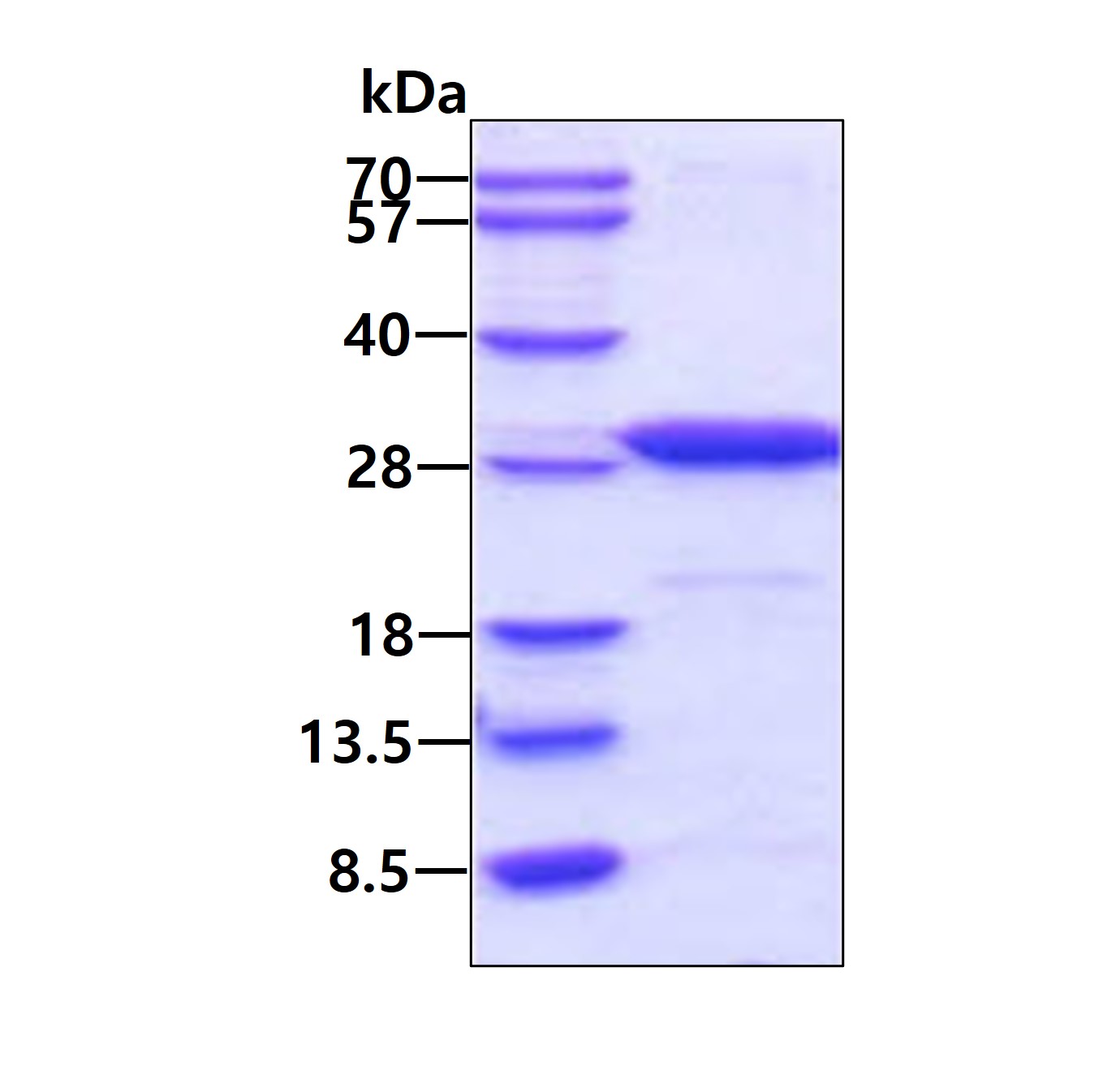
| Applications | SDS-PAGE |
| Host | E.coli |
| Note | STRICTLY FOR FURTHER SCIENTIFIC RESEARCH USE ONLY (RUO). MUST NOT TO BE USED IN DIAGNOSTIC OR THERAPEUTIC APPLICATIONS. |
Product Properties
| Concentration | 1 mg/mL |
| Formulation | Liquid in phosphate-Buffered Saline (pH 7.4) containing 10% Glycerol, 1mM DTT |
| Storage Instruction | For short term storage, keep at +2C to +8C for up to 1 week. For long term storage, aliquot and store at-20C, and avoid repeat freeze-thaw cycles. |
Target Information
| Gene Symbol | Uchl1 |
| Gene ID | 22223 |
| Uniprot ID | UCHL1_MOUSE |
| Accession Number | NP_035800 |
| Immunogen | Mouse |
| Immunogen Region | 1-223aa |
| Immunogen Sequence |
Additional Info
| Tissue Specificity | Expressed in brain, where it is found in neurons but not in oligodendrocytes or astrocytes. Found in the ganglion cell layer and the inner nuclear layer of the retina (at protein level). Expressed in brain and testis. In the brain, expression is at its lowest in replaceable neurons of hippocampus and olfactory bulb. Highly expressed in senescent pituitary. In skeletal muscle, primarily expressed in oxidative muscle fibers. |
| Post Translational Modifications | O-glycosylated. |
| Function | Deubiquitinase that plays a role in the regulation of several processes such as maintenance of synaptic function, cardiac function, inflammatory response or osteoclastogenesis. Abrogates the ubiquitination of multiple proteins including WWTR1/TAZ, EGFR, HIF1A and beta-site amyloid precursor protein cleaving enzyme 1/BACE1. In addition, recognizes and hydrolyzes a peptide bond at the C-terminal glycine of ubiquitin to maintain a stable pool of monoubiquitin that is a key requirement for the ubiquitin-proteasome and the autophagy-lysosome pathways. Regulates amyloid precursor protein/APP processing by promoting BACE1 degradation resulting in decreased amyloid beta production. Plays a role in the immune response by regulating the ability of MHC I molecules to reach cross-presentation compartments competent for generating Ag-MHC I complexes. Mediates the 'Lys-48'-linked deubiquitination of the transcriptional coactivator WWTR1/TAZ leading to its stabilization and inhibition of osteoclastogenesis. Deubiquitinates and stabilizes epidermal growth factor receptor EGFR to prevent its degradation and to activate its downstream mediators. Modulates oxidative activity in skeletal muscle by regulating key mitochondrial oxidative proteins. Enhances the activity of hypoxia-inducible factor 1-alpha/HIF1A by abrogateing its VHL E3 ligase-mediated ubiquitination and consequently inhibiting its degradation. |
| Protein Name | Ubiquitin Carboxyl-Terminal Hydrolase Isozyme L1Uch-L1Neuron Cytoplasmic Protein 9.5Pgp 9.5Pgp9.5Ubiquitin Thioesterase L1 |
| Database Links | Reactome: R-MMU-5689603 |
| Cellular Localisation | CytoplasmEndoplasmic Reticulum MembraneLipid-AnchorLocalizes Near And/Or Within Mitochondria To Potentially Interact With Mitochondrial Proteins |
| Alternative Protein Names | Ubiquitin Carboxyl-Terminal Hydrolase Isozyme L1 proteinUch-L1 proteinNeuron Cytoplasmic Protein 9.5 proteinPgp 9.5 proteinPgp9.5 proteinUbiquitin Thioesterase L1 proteinUchl1 protein |
Information sourced from Uniprot.org