

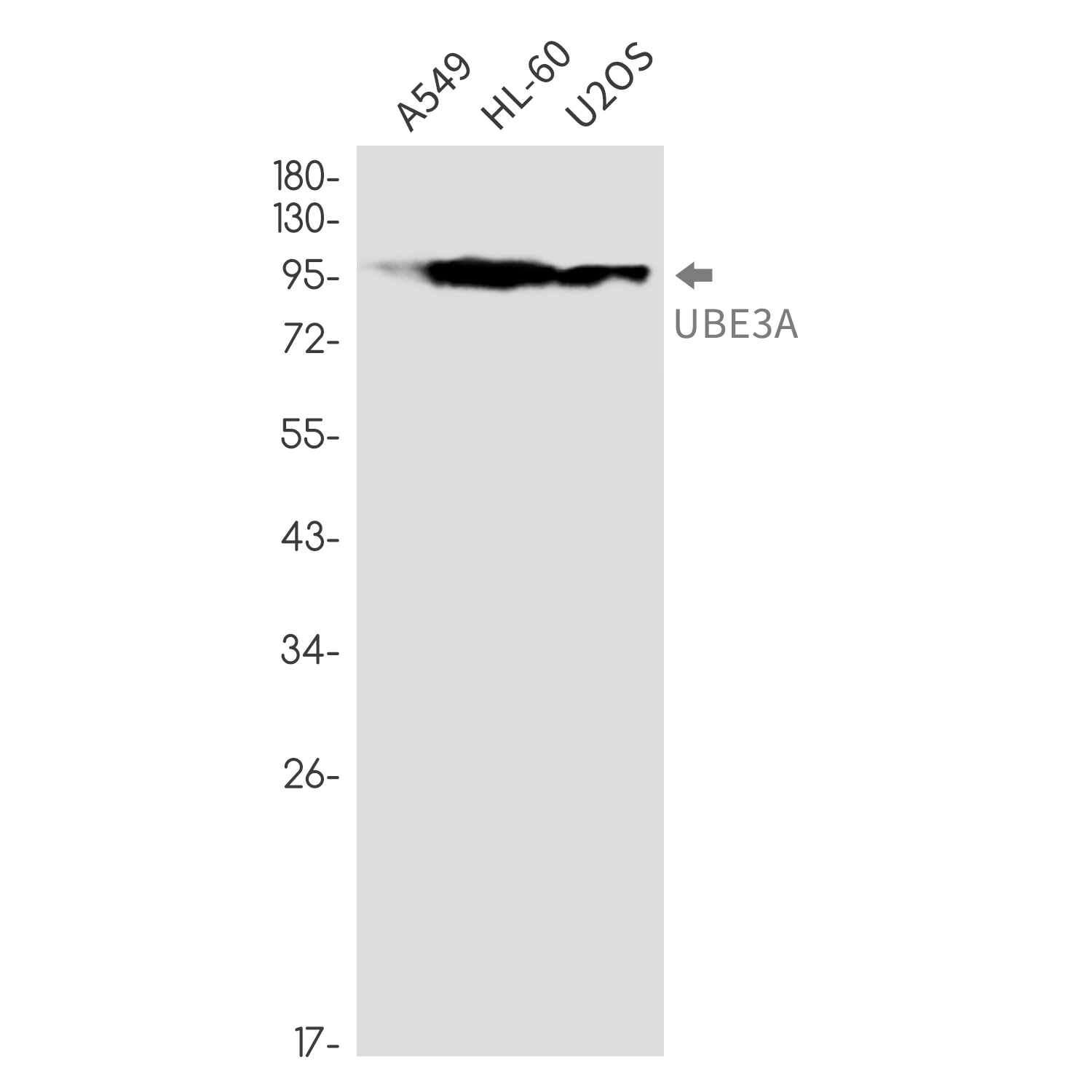

Anti-Ubiquitin Protein Ligase E3A antibody [R02-1A0] (STJA0035397)
SPECIFICATIONS
ClonalityMonoclonal
HostRabbit
ConjugationUnconjugated
IsotypeIgG
ImmunogenRecombinant protein of human UBE3A
General Information
| Short Description | Rabbit monoclonal anti-Ubiquitin Protein Ligase E3A for use in WB, ICC, IF and IP in Human, Mouse and Rat samples. Datasheet included with dilution recommendations, and related reagents. |
| Applications | WB/ICC/IF/IP |
| Host | Rabbit |
| Reactivity | Human/Mouse/Rat |
| Note | STRICTLY FOR FURTHER SCIENTIFIC RESEARCH USE ONLY (RUO). MUST NOT TO BE USED IN DIAGNOSTIC OR THERAPEUTIC APPLICATIONS. |
Product Properties
| Clonality | Monoclonal |
| Clone ID | R02-1A0 |
| Isotype | IgG |
| Conjugation | Unconjugated |
| Concentration | 0.3 mg/mL |
| Purification | Affinity Purified |
| Dilution Range | WB 1:500-1:1000IF 1:50-1:200IP 1:20 |
| Formulation | 50mM Tris-Glycine (pH 7.4) , 0.15M NaCl, 40% Glycerol, 0.01% Sodium azide and 0.05% BSA |
| Storage Instruction | Store at 4°C short term. Aliquot and store at-20°C long term. Avoid freeze/thaw cycles. |
Target Information
| Gene Symbol | UBE3A |
| Gene ID | 7337 |
| Uniprot ID | UBE3A_HUMAN |
| Immunogen | Recombinant protein of human UBE3A |
Additional Info
| Post Translational Modifications | Phosphorylation at Tyr-659 by ABL1 impairs E3 ligase activity and protects p53/TP53 from degradation in (HPV)-infected cells. |
| Function | E3 ubiquitin-protein ligase which accepts ubiquitin from an E2 ubiquitin-conjugating enzyme in the form of a thioester and transfers it to its substrates. Several substrates have been identified including the BMAL1, ARC, LAMTOR1, RAD23A and RAD23B, MCM7 (which is involved in DNA replication), annexin A1, the PML tumor suppressor, and the cell cycle regulator CDKN1B. Additionally, may function as a cellular quality control ubiquitin ligase by helping the degradation of the cytoplasmic misfolded proteins. Finally, UBE3A also promotes its own degradation in vivo. Plays an important role in the regulation of the circadian clock: involved in the ubiquitination of the core clock component BMAL1, leading to its proteasomal degradation. Acts as transcriptional coactivator of progesterone receptor PGR upon progesterone hormone activation. Acts as a regulator of synaptic development by mediating ubiquitination and degradation of ARC. Required for synaptic remodeling in neurons by mediating ubiquitination and degradation of LAMTOR1, thereby limiting mTORC1 signaling and activity-dependent synaptic remodeling. Synergizes with WBP2 in enhancing PGR activity. (Microbial infection) Catalyzes the high-risk human papilloma virus E6-mediated ubiquitination of p53/TP53, contributing to the neoplastic progression of cells infected by these viruses. |
| Protein Name | Ubiquitin-Protein Ligase E3aE6ap Ubiquitin-Protein LigaseHect-Type Ubiquitin Transferase E3aHuman Papillomavirus E6-Associated ProteinOncogenic Protein-Associated Protein E6-ApRenal Carcinoma Antigen Ny-Ren-54 |
| Database Links | Reactome: R-HSA-983168 |
| Cellular Localisation | CytoplasmNucleus |
| Alternative Antibody Names | Anti-Ubiquitin-Protein Ligase E3a antibodyAnti-E6ap Ubiquitin-Protein Ligase antibodyAnti-Hect-Type Ubiquitin Transferase E3a antibodyAnti-Human Papillomavirus E6-Associated Protein antibodyAnti-Oncogenic Protein-Associated Protein E6-Ap antibodyAnti-Renal Carcinoma Antigen Ny-Ren-54 antibodyAnti-UBE3A antibodyAnti-E6AP antibodyAnti-EPVE6AP antibodyAnti-HPVE6A antibody |
Information sourced from Uniprot.org