


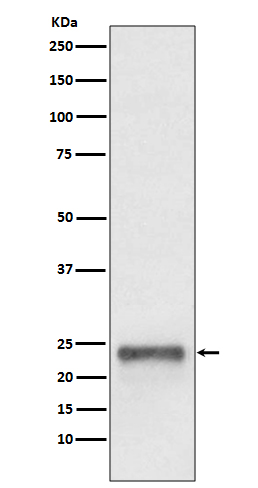
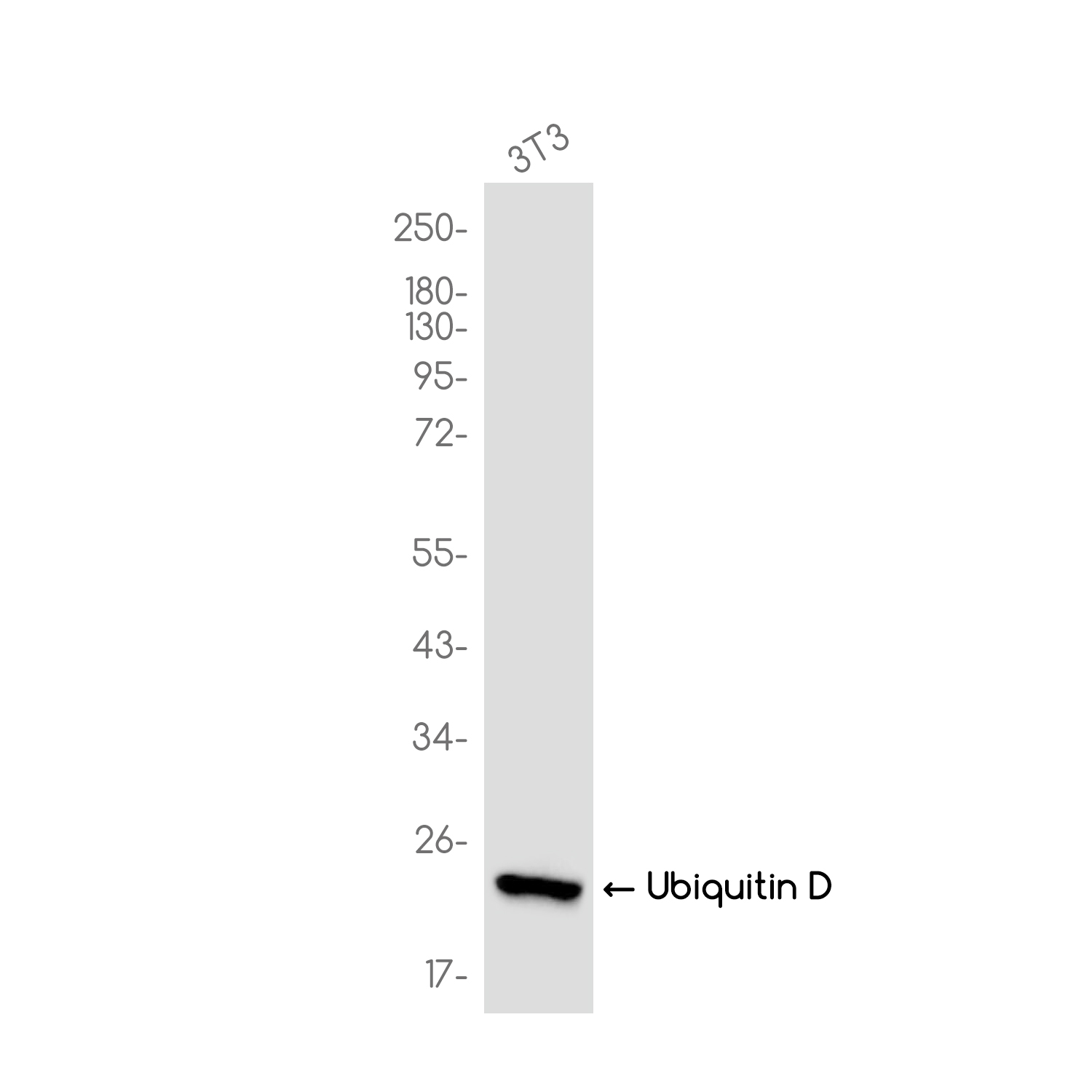

Anti-Ubiquitin D antibody [R07-1H1] (STJA0036183)
SPECIFICATIONS
ClonalityMonoclonal
HostRabbit
ConjugationUnconjugated
IsotypeIgG
ImmunogenA synthesized peptide derived from human Ubiquitin D
General Information
| Short Description | Rabbit monoclonal anti-Ubiquitin D for use in WB, IHC-P, ICC and IF in Human and Mouse samples. Datasheet included with dilution recommendations, and related reagents. |
| Applications | WB/IHC-P/ICC/IF |
| Host | Rabbit |
| Reactivity | Human/Mouse |
| Note | STRICTLY FOR FURTHER SCIENTIFIC RESEARCH USE ONLY (RUO). MUST NOT TO BE USED IN DIAGNOSTIC OR THERAPEUTIC APPLICATIONS. |
Product Properties
| Clonality | Monoclonal |
| Clone ID | R07-1H1 |
| Isotype | IgG |
| Conjugation | Unconjugated |
| Purification | Affinity Chromatography |
| Dilution Range | WB 1:500-1:1000IHC 1:50-1:100IF 1:50-1:200 |
| Formulation | Rabbit IgG in phosphate buffered saline, pH 7.4, 150mM NaCl, 0.02% sodium azide and 50% glycerol. |
| Storage Instruction | Store at 4°C short term. Aliquot and store at-20°C long term. Avoid freeze/thaw cycles. |
Target Information
| Gene Symbol | UBD |
| Gene ID | 10537 |
| Uniprot ID | UBD_HUMAN |
| Immunogen | A synthesized peptide derived from human Ubiquitin D |
Additional Info
| Tissue Specificity | Constitutively expressed in mature dendritic cells and B-cells. Mostly expressed in the reticuloendothelial system (e.g. thymus, spleen), the gastrointestinal system, kidney, lung and prostate gland. |
| Post Translational Modifications | Can be acetylated. |
| Function | Ubiquitin-like protein modifier which can be covalently attached to target proteins and subsequently leads to their degradation by the 26S proteasome, in a NUB1-dependent manner. Conjugation to the target protein is activated by UBA6 via adenylation of its C-terminal glycine. Promotes the expression of the proteasome subunit beta type-9 (PSMB9/LMP2). Regulates TNF-alpha-induced and LPS-mediated activation of the central mediator of innate immunity NF-kappa-B by promoting TNF-alpha-mediated proteasomal degradation of ubiquitinated-I-kappa-B-alpha. Required for TNF-alpha-induced p65 nuclear translocation in renal tubular epithelial cells (RTECs). May be involved in dendritic cell (DC) maturation, the process by which immature dendritic cells differentiate into fully competent antigen-presenting cells that initiate T-cell responses. Mediates mitotic non-disjunction and chromosome instability, in long-term in vitro culture and cancers, by abbreviating mitotic phase and impairing the kinetochore localization of MAD2L1 during the prometaphase stage of the cell cycle. May be involved in the formation of aggresomes when proteasome is saturated or impaired. Mediates apoptosis in a caspase-dependent manner, especially in renal epithelium and tubular cells during renal diseases such as polycystic kidney disease and Human immunodeficiency virus (HIV)-associated nephropathy (HIVAN). |
| Protein Name | Ubiquitin DDiubiquitinUbiquitin-Like Protein Fat10 |
| Database Links | Reactome: R-HSA-8951664 |
| Cellular Localisation | NucleusCytoplasmAccumulates In Aggresomes Under Proteasome Inhibition Conditions |
| Alternative Antibody Names | Anti-Ubiquitin D antibodyAnti-Diubiquitin antibodyAnti-Ubiquitin-Like Protein Fat10 antibodyAnti-UBD antibodyAnti-FAT10 antibody |
Information sourced from Uniprot.org