
![Anti-TG/Thyroglobulin nanobody [SAA1339] (STJN000077)](https://cdn11.bigcommerce.com/s-zso2xnchw9/images/stencil/124x110/products/200690/412872/STJN000077-SDS-PAGE-1__99005.1749232416.jpg?c=1 "Anti-TG/Thyroglobulin nanobody [SAA1339] (STJN000077)")
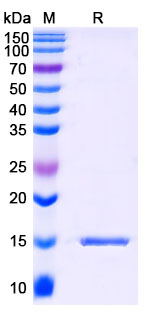
![Anti-TG/Thyroglobulin nanobody [SAA1339] (STJN000077)](https://cdn11.bigcommerce.com/s-zso2xnchw9/images/stencil/1280x1280/products/200690/412872/STJN000077-SDS-PAGE-1__99005.1749232416.jpg?c=1 "Anti-TG/Thyroglobulin nanobody [SAA1339] (STJN000077)")
Anti-TG/Thyroglobulin nanobody [SAA1339] (STJN000077)
SPECIFICATIONS
ClonalityMonoclonal
HostAlpaca
ConjugationUnconjugated
IsotypeVHH-8His-Cys-tag
General Information
| Short Description | Alpaca monoclonal nanobody anti-Thyroglobulin is suitable for use in ELISA, Immunofluorescence, Immunohistochemistry, RIA and SPR research applications. |
| Applications | ELISA/IF/IHC/RIA/SPR |
| Host | Alpaca |
| Reactivity | Human |
| Note | STRICTLY FOR FURTHER SCIENTIFIC RESEARCH USE ONLY (RUO). MUST NOT BE USED IN DIAGNOSTIC OR THERAPEUTIC APPLICATIONS. |
Product Properties
| Clonality | Monoclonal |
| Clone ID | SAA1339 |
| Isotype | VHH-8His-Cys-tag |
| Conjugation | Unconjugated |
| Concentration | 1 mg/mL |
| Purification | Purified by Nickel column. |
| Formulation | 0.01M PBS, pH 7.4. |
| Storage Instruction | Use a manual defrost freezer and avoid repeated freeze-thaw cycles. Store at 4°C short term (1-2 weeks). Store at-20°C 12 months. Store at-80°C long term. |
Target Information
| Gene Symbol | TG |
| Gene ID | 7038 |
| Uniprot ID | THYG_HUMAN |
Additional Info
| Post Translational Modifications | Iodinated on tyrosine residues by TPO. There are 4 pairs of iodinated tyrosines used for coupling: acceptor Tyr-24 is coupled to donor Tyr-149 or Tyr-234, acceptor Tyr-2573 is coupled to donor Tyr-2540, acceptor Tyr-2766 in monomer 1 is coupled to donor Tyr-2766 in monomer 2 and acceptor Tyr-1310 in monomer 1 is coupled to donor Tyr-108 in monomer 2. Sulfated tyrosines are desulfated during iodination. Undergoes sequential proteolysis by cathepsins to release thyroxine (T4) and triiodothyronine (T3) hormones. In the thyroid follicle lumen, cross-linked TG (storage form) is solubilized by limited proteolysis mediated by cathepsins CTSB and/or CTSL. Partially cleaved TG is further processed by CTSK/cathepsin K and/or CTSL resulting in the release of T4. Following endocytosis, further processing occurs leading to the release of T3 and more T4 hormones. |
| Function | Acts as a substrate for the production of iodinated thyroid hormones thyroxine (T4) and triiodothyronine (T3). The synthesis of T3 and T4 involves iodination of selected tyrosine residues of TG/thyroglobulin followed by their oxidative coupling in the thyroid follicle lumen. Following TG re-internalization and lysosomal-mediated proteolysis, T3 and T4 are released from the polypeptide backbone leading to their secretion into the bloodstream. One dimer produces 7 thyroid hormone molecules. |
| Protein Name | ThyroglobulinTg |
| Database Links | |
| Cellular Localisation | SecretedSecreted Into The Thyroid Follicle LumenLocalizes To Colloid GlobulesA Structure Formed In The Thyroid Follicle Lumen Consisting Of Cross-Linked Tg Arranged In Concentric Layers |
| Alternative Nanobody Names | Anti-Thyroglobulin nanobodyAnti-Tg nanobodyAnti-TG nanobody |
Information sourced from Uniprot.org