


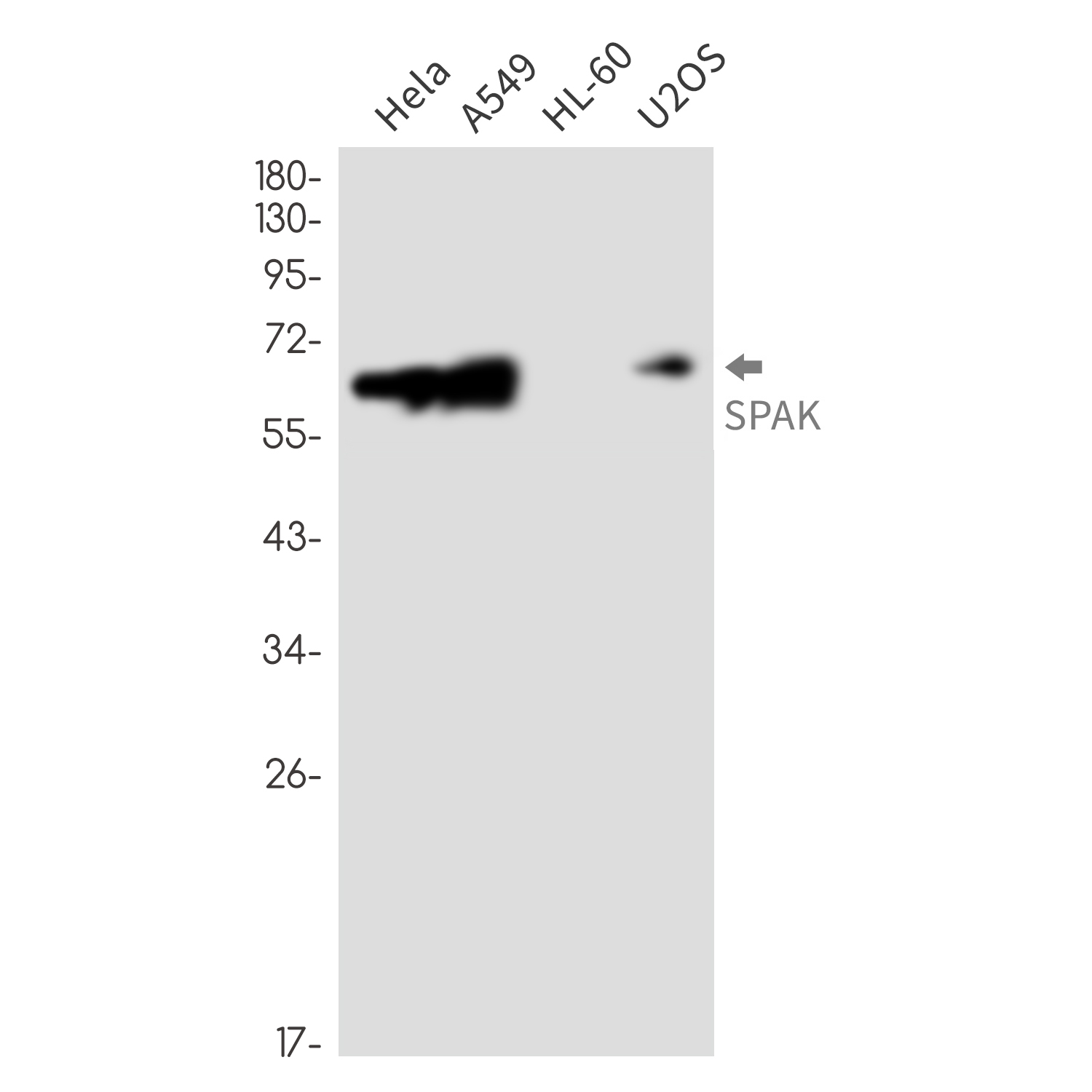
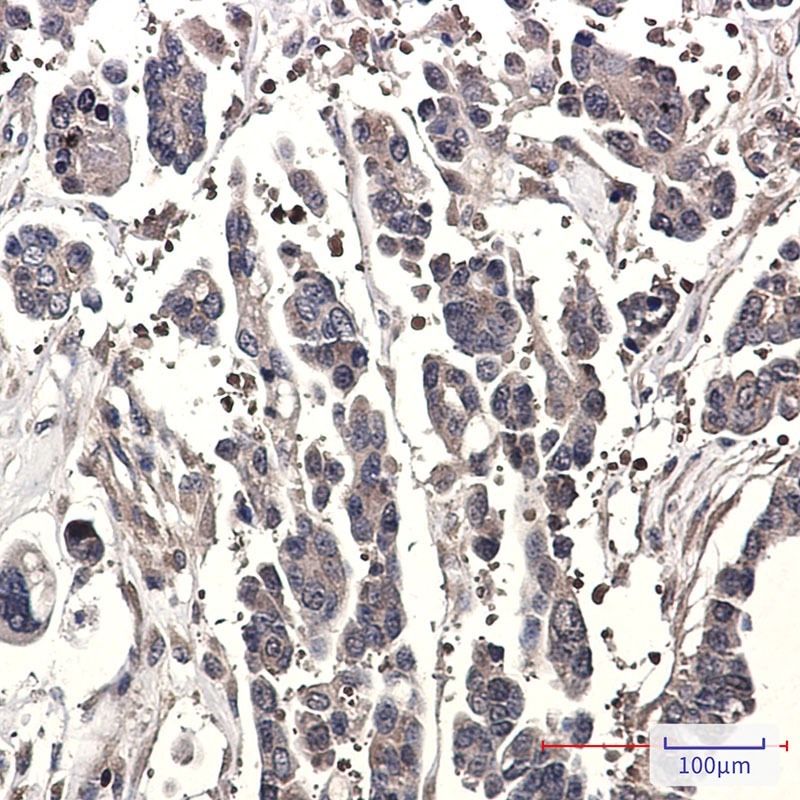

Anti-SPAK antibody [R06-2B0] (STJA0035366)
SPECIFICATIONS
ClonalityMonoclonal
HostRabbit
ConjugationUnconjugated
IsotypeIgG
ImmunogenA synthetic peptide of human SPAK
General Information
| Short Description | Rabbit monoclonal anti-SPAK for use in WB and IHC-P in Human samples. Datasheet included with dilution recommendations, and related reagents. |
| Applications | WB/IHC-P |
| Host | Rabbit |
| Reactivity | Human |
| Note | STRICTLY FOR FURTHER SCIENTIFIC RESEARCH USE ONLY (RUO). MUST NOT TO BE USED IN DIAGNOSTIC OR THERAPEUTIC APPLICATIONS. |
Product Properties
| Clonality | Monoclonal |
| Clone ID | R06-2B0 |
| Isotype | IgG |
| Conjugation | Unconjugated |
| Concentration | 0.3 mg/mL |
| Purification | Affinity Purified |
| Dilution Range | WB 1:500-1:1000IHC 1:50-1:100 |
| Formulation | 50mM Tris-Glycine (pH 7.4) , 0.15M NaCl, 40% Glycerol, 0.01% Sodium azide and 0.05% BSA |
| Storage Instruction | Store at 4°C short term. Aliquot and store at-20°C long term. Avoid freeze/thaw cycles. |
Target Information
| Gene Symbol | STK39 |
| Gene ID | 27347 |
| Uniprot ID | STK39_HUMAN |
| Immunogen | A synthetic peptide of human SPAK |
Additional Info
| Tissue Specificity | Predominantly expressed in brain and pancreas followed by heart, lung, kidney, skeletal muscle, liver, placenta and testis. |
| Post Translational Modifications | Phosphorylation at Thr-231 by WNK kinases (WNK1, WNK2, WNK3 or WNK4) is required for activation. Autophosphorylation at Thr-231 positively regulates its activity. Phosphorylated at Ser-309 by PRKCQ. |
| Function | Effector serine/threonine-protein kinase component of the WNK-SPAK/OSR1 kinase cascade, which is involved in various processes, such as ion transport, response to hypertonic stress and blood pressure. Specifically recognizes and binds proteins with a RFXV motif. Acts downstream of WNK kinases (WNK1, WNK2, WNK3 or WNK4): following activation by WNK kinases, catalyzes phosphorylation of ion cotransporters, such as SLC12A1/NKCC2, SLC12A2/NKCC1, SLC12A3/NCC, SLC12A5/KCC2 or SLC12A6/KCC3, regulating their activity. Mediates regulatory volume increase in response to hyperosmotic stress by catalyzing phosphorylation of ion cotransporters SLC12A1/NKCC2, SLC12A2/NKCC1 and SLC12A6/KCC3 downstream of WNK1 and WNK3 kinases. Phosphorylation of Na-K-Cl cotransporters SLC12A2/NKCC1 and SLC12A2/NKCC1 promote their activation and ion influx.simultaneously, phosphorylation of K-Cl cotransporters SLC12A5/KCC2 and SLC12A6/KCC3 inhibit their activity, blocking ion efflux. Acts as a regulator of NaCl reabsorption in the distal nephron by mediating phosphorylation and activation of the thiazide-sensitive Na-Cl cotransporter SLC12A3/NCC in distal convoluted tubule cells of kidney downstream of WNK4. Mediates the inhibition of SLC4A4, SLC26A6 as well as CFTR activities. Phosphorylates RELT. |
| Protein Name | Ste20/Sps1-Related Proline-Alanine-Rich Protein KinaseSte-20-Related KinaseDchtSerine/Threonine-Protein Kinase 39 |
| Database Links | |
| Cellular Localisation | CytoplasmNucleusNucleus When Caspase-Cleaved |
| Alternative Antibody Names | Anti-Ste20/Sps1-Related Proline-Alanine-Rich Protein Kinase antibodyAnti-Ste-20-Related Kinase antibodyAnti-Dcht antibodyAnti-Serine/Threonine-Protein Kinase 39 antibodyAnti-STK39 antibodyAnti-PASK antibodyAnti-SPAK antibody |
Information sourced from Uniprot.org