
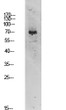
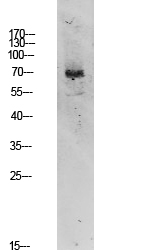
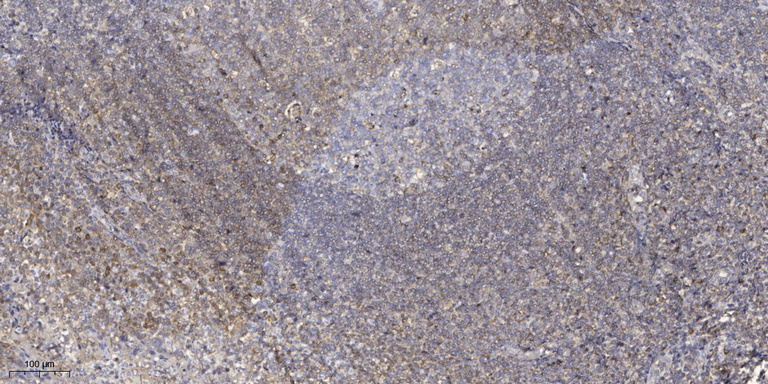

Anti-RRN3 antibody (STJ99630)
SPECIFICATIONS
ClonalityPolyclonal
HostRabbit
ConjugationUnconjugated
IsotypeIgG
ImmunogenSynthesized peptide derived from the human TIF-IA Polyclonal
General Information
| Short Description | Rabbit polyclonal anti-RNA polymerase I-specific transcription initiation factor RRN3 for use in WB and IHC in Human, Mouse and Rat samples. Datasheet included with dilution recommendations, and related reagents. |
| Applications | WB/IHC |
| Host | Rabbit |
| Reactivity | Human/Mouse/Rat |
| Note | STRICTLY FOR FURTHER SCIENTIFIC RESEARCH USE ONLY (RUO). MUST NOT TO BE USED IN DIAGNOSTIC OR THERAPEUTIC APPLICATIONS. |
Product Properties
| Clonality | Polyclonal |
| Isotype | IgG |
| Conjugation | Unconjugated |
| Concentration | 1 mg/mL |
| Purification | The antibody was affinity-purified from rabbit antiserum by affinity-chromatography using epitope-specific immunogen. |
| Dilution Range | WB 1:500-2000IHC-P 1:50-300 |
| Formulation | Liquid in PBS containing 50% Glycerol, 0.5% BSA and 0.02% Sodium Azide. |
| Storage Instruction | Store at-20°C for up to 1 year from the date of receipt, and avoid repeat freeze-thaw cycles. |
Target Information
| Gene Symbol | RRN3 |
| Gene ID | 54700 |
| Uniprot ID | RRN3_HUMAN |
| Immunogen | Synthesized peptide derived from the human TIF-IA Polyclonal |
| Specificity | This antibody detects endogenous levels of TIF-IA. |
Additional Info
| Function | Required for efficient transcription initiation by RNA polymerase I (Pol I). Required for the formation of the competent pre-initiation complex (PIC). |
| Protein Name | Rna Polymerase I-Specific Transcription Initiation Factor Rrn3Transcription Initiation Factor IaTif-Ia |
| Database Links | Reactome: R-HSA-73762Reactome: R-HSA-73772 |
| Cellular Localisation | NucleusNucleolus |
| Alternative Antibody Names | Anti-Rna Polymerase I-Specific Transcription Initiation Factor Rrn3 antibodyAnti-Transcription Initiation Factor Ia antibodyAnti-Tif-Ia antibodyAnti-RRN3 antibodyAnti-TIFIA antibody |
Information sourced from Uniprot.org