

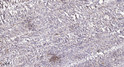
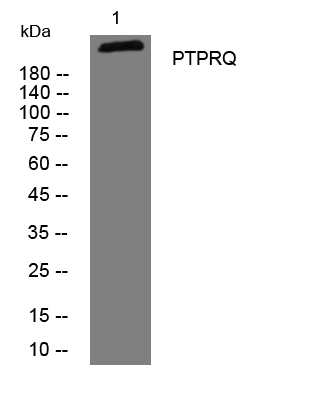
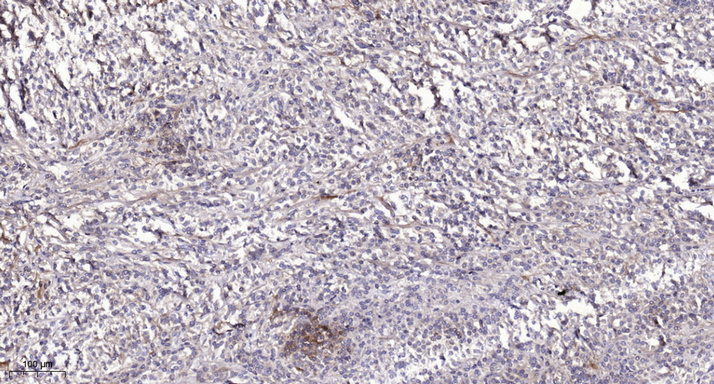

Anti-PTPRQ antibody (1729-1779 aa) (STJ194994)
SPECIFICATIONS
ClonalityPolyclonal
HostRabbit
ConjugationUnconjugated
IsotypeIgG
ImmunogenSynthesized peptide derived from the human PTPRQ at the amino acid range 1729-1779
General Information
| Short Description | Rabbit polyclonal anti-Phosphatidylinositol phosphatase PTPRQ (1729-1779 aa) for use in WB and IHC in Human, Mouse and Rat samples. Datasheet included with dilution recommendations, and related reagents. |
| Applications | WB/IHC |
| Host | Rabbit |
| Reactivity | Human/Mouse/Rat |
| Note | STRICTLY FOR FURTHER SCIENTIFIC RESEARCH USE ONLY (RUO). MUST NOT TO BE USED IN DIAGNOSTIC OR THERAPEUTIC APPLICATIONS. |
Product Properties
| Clonality | Polyclonal |
| Isotype | IgG |
| Conjugation | Unconjugated |
| Concentration | 1 mg/mL |
| Purification | The antibody was affinity-purified from rabbit antiserum by affinity-chromatography using epitope-specific immunogen. |
| Dilution Range | WB 1:500-2000IHC-P 1:50-300 |
| Formulation | Liquid in PBS containing 50% Glycerol, 0.5% BSA and 0.02% Sodium Azide. |
| Storage Instruction | Store at-20°C for up to 1 year from the date of receipt, and avoid repeat freeze-thaw cycles. |
Target Information
| Gene Symbol | PTPRQUniprot ID=PTPRQ_HUMAN" |
| Immunogen | Synthesized peptide derived from the human PTPRQ at the amino acid range 1729-1779 |
| Immunogen Region | 1729-1779 aa |
| Specificity | This antibody detects endogenous levels of PTPRQ at Human/Mouse/Rat |
Additional Info
| Function | Dephosphorylates phosphatidylinositol phosphates, such as phosphatidylinositol 3,4,5-trisphosphate (PIP3) and phosphatidylinositol 3,5-diphosphates, with preference for PIP3. Phosphate can be hydrolyzed from the D3 and D5 positions in the inositol ring. Has low tyrosine-protein phosphatase activity in vitro.however, the relevance of such activity in vivo is unclear. Plays an important role in adipogenesis of mesenchymal stem cells (MSCs). Regulates the phosphorylation state of AKT1 by regulating the levels of PIP3 in MSCs and preadipocyte cells. Required for hair bundle maturation, a process that enables hair cells to detect and transmit sound and balance signals effectively, therefore affecting auditory function. May act by regulating the level of phosphatidylinositol 4,5-bisphosphate (PIP2) level in the basal region of hair bundles. |
| Protein Name | Phosphatidylinositol Phosphatase Ptprq Receptor-Type Tyrosine-Protein Phosphatase QPtp-RqR-Ptp-Q |
| Cellular Localisation | Cell ProjectionStereociliumApical Cell MembraneSingle-Pass Type I Membrane ProteinBasal Cell MembraneDetected At The Stereocilium Base And At The Apical Cell Membrane In Mature Hair CellsForms Ring-Like Structures In The Stereocilium Taper RegionDetected At The Basal Cell Membrane In Fetal Kidney Podocytes |
| Alternative Antibody Names | Anti-Phosphatidylinositol Phosphatase Ptprq antibodyAnti-Receptor-Type Tyrosine-Protein Phosphatase Q antibodyAnti-Ptp-Rq antibodyAnti-R-Ptp-Q antibodyAnti-PTPRQ antibody |
Information sourced from Uniprot.org