
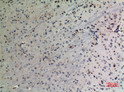


Anti-PPID antibody (321-370 aa) (STJ96509)
SPECIFICATIONS
ClonalityPolyclonal
HostRabbit
ConjugationUnconjugated
IsotypeIgG
ImmunogenThe antiserum was produced against synthesized peptide derived from the C-terminal region of human PPID at the amino acid range 321-370
General Information
| Short Description | Rabbit polyclonal anti-Peptidyl-prolyl cis-trans isomerase D (321-370 aa) for use in WB, IHC, IF and ELISA in Human, Mouse and Rat samples. Datasheet included with dilution recommendations, and related reagents. |
| Applications | WB/IHC/IF/ELISA |
| Host | Rabbit |
| Reactivity | Human/Mouse/Rat |
| Note | STRICTLY FOR FURTHER SCIENTIFIC RESEARCH USE ONLY (RUO). MUST NOT TO BE USED IN DIAGNOSTIC OR THERAPEUTIC APPLICATIONS. |
Product Properties
| Clonality | Polyclonal |
| Isotype | IgG |
| Conjugation | Unconjugated |
| Concentration | 1 mg/mL |
| Purification | The antibody was affinity-purified from rabbit antiserum by affinity-chromatography using epitope-specific immunogen. |
| Dilution Range | WB 1:500-1:2000IHC-P 1:100-300ELISA 1:20000IF 1:50-200 |
| Formulation | Liquid in PBS containing 50% Glycerol, 0.5% BSA and 0.02% Sodium Azide. |
| Storage Instruction | Store at-20°C for up to 1 year from the date of receipt, and avoid repeat freeze-thaw cycles. |
Target Information
| Gene Symbol | PPID |
| Gene ID | 5481 |
| Uniprot ID | PPID_HUMAN |
| Immunogen | The antiserum was produced against synthesized peptide derived from the C-terminal region of human PPID at the amino acid range 321-370 |
| Immunogen Region | 321-370 aa |
| Specificity | Cyclophilin D Polyclonal Antibody detects endogenous levels of Cyclophilin D protein. |
Additional Info
| Function | PPIase that catalyzes the cis-trans isomerization of proline imidic peptide bonds in oligopeptides and may therefore assist protein folding. Proposed to act as a co-chaperone in HSP90 complexes such as in unligated steroid receptors heterocomplexes. Different co-chaperones seem to compete for association with HSP90 thus establishing distinct HSP90-co-chaperone-receptor complexes with the potential to exert tissue-specific receptor activity control. May have a preference for estrogen receptor complexes and is not found in glucocorticoid receptor complexes. May be involved in cytoplasmic dynein-dependent movement of the receptor from the cytoplasm to the nucleus. May regulate MYB by inhibiting its DNA-binding activity. Involved in regulation of AHR signaling by promoting the formation of the AHR:ARNT dimer.the function is independent of HSP90 but requires the chaperone activity. Involved in regulation of UV radiation-induced apoptosis. Promotes cell viability in anaplastic lymphoma kinase-positive anaplastic large-cell lymphoma (ALK+ ALCL) cell lines. (Microbial infection) May be involved in hepatitis C virus (HCV) replication and release. |
| Protein Name | Peptidyl-Prolyl Cis-Trans Isomerase DPpiase D40 Kda Peptidyl-Prolyl Cis-Trans IsomeraseCyclophilin-40Cyp-40Cyclophilin-Related ProteinRotamase D |
| Database Links | Reactome: R-HSA-8939211 |
| Cellular Localisation | CytoplasmNucleusNucleolusNucleoplasm |
| Alternative Antibody Names | Anti-Peptidyl-Prolyl Cis-Trans Isomerase D antibodyAnti-Ppiase D antibodyAnti-40 Kda Peptidyl-Prolyl Cis-Trans Isomerase antibodyAnti-Cyclophilin-40 antibodyAnti-Cyp-40 antibodyAnti-Cyclophilin-Related Protein antibodyAnti-Rotamase D antibodyAnti-PPID antibodyAnti-CYP40 antibodyAnti-CYPD antibody |
Information sourced from Uniprot.org