





Anti-Phospho-NFAT5-Ser155 antibody (121-170 aa) (STJ90634)
SPECIFICATIONS
ClonalityPolyclonal
HostRabbit
ConjugationUnconjugated
IsotypeIgG
ImmunogenThe antiserum was produced against synthesized peptide derived from the human NFAT5/TonEBP around the phosphorylation site of Ser155 at the amino acid range 121-170
General Information
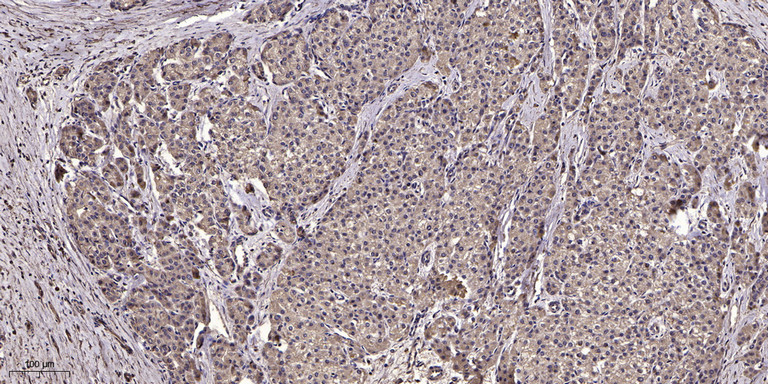
| Short Description | Rabbit polyclonal anti-Phospho-Nuclear factor of activated T-cells 5-Ser155 (121-170 aa) for use in WB and IHC in Human and Mouse samples. Datasheet included with dilution recommendations, and related reagents. |
| Applications | WB/IHC |
| Host | Rabbit |
| Reactivity | Human/Mouse |
| Note | STRICTLY FOR FURTHER SCIENTIFIC RESEARCH USE ONLY (RUO). MUST NOT TO BE USED IN DIAGNOSTIC OR THERAPEUTIC APPLICATIONS. |
Product Properties
| Clonality | Polyclonal |
| Isotype | IgG |
| Conjugation | Unconjugated |
| Concentration | 1 mg/mL |
| Purification | The antibody was affinity-purified from rabbit antiserum by affinity-chromatography using epitope-specific immunogen. |
| Dilution Range | WB 1:500-2000IHC-P 1:50-300 |
| Formulation | Liquid in PBS containing 50% Glycerol, 0.5% BSA and 0.02% Sodium Azide. |
| Storage Instruction | Store at-20°C for up to 1 year from the date of receipt, and avoid repeat freeze-thaw cycles. |
Target Information
| Gene Symbol | NFAT5 |
| Gene ID | 10725 |
| Uniprot ID | NFAT5_HUMAN |
| Immunogen | The antiserum was produced against synthesized peptide derived from the human NFAT5/TonEBP around the phosphorylation site of Ser155 at the amino acid range 121-170 |
| Immunogen Region | 121-170 aa |
| Specificity | Phospho-NFAT5 (S155) Polyclonal Antibody detects endogenous levels of NFAT5 protein only when phosphorylated at S155. |
Additional Info
| Post Translational Modifications | Phosphorylated. Phosphorylated at Thr-135 by CDK5 in response to osmotic stress.this phosphorylation mediates its rapid nuclear localization. Poly-ADP-ribosylated by PARP1 in response to DNA damage, promoting recruitment to sites of R-loop-associated DNA damage. |
| Function | Transcription factor involved, among others, in the transcriptional regulation of osmoprotective and inflammatory genes. Binds the DNA consensus sequence 5'-ACTAGTGGAAACATATAATCCAATGGTGACCGCT-3'. Mediates the transcriptional response to hypertonicity. Positively regulates the transcription of LCN2 and S100A4 genes.optimal transactivation of these genes requires the presence of DDX5/DDX17. Also involved in the DNA damage response by preventing formation of R-loops.R-loops are composed of a DNA:RNA hybrid and the associated non-template single-stranded DNA. |
| Protein Name | Nuclear Factor Of Activated T-Cells 5Nf-At5T-Cell Transcription Factor Nfat5Tonicity-Responsive Enhancer-Binding ProteinTone-Binding ProteinTonebp |
| Database Links | |
| Cellular Localisation | NucleusCytoplasmChromosomeNuclear Distribution Increases Under Hypertonic ConditionsRecruited To Sites Of R-Loop-Associated Dna Damage Following Poly-Adp-Ribosylation By Parp1 |
| Alternative Antibody Names | Anti-Nuclear Factor Of Activated T-Cells 5 antibodyAnti-Nf-At5 antibodyAnti-T-Cell Transcription Factor Nfat5 antibodyAnti-Tonicity-Responsive Enhancer-Binding Protein antibodyAnti-Tone-Binding Protein antibodyAnti-Tonebp antibodyAnti-NFAT5 antibodyAnti-KIAA0827 antibodyAnti-TONEBP antibody |
Information sourced from Uniprot.org