


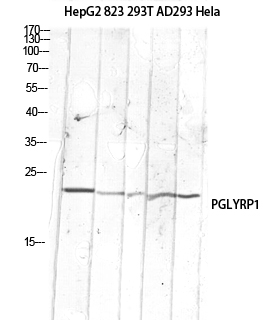
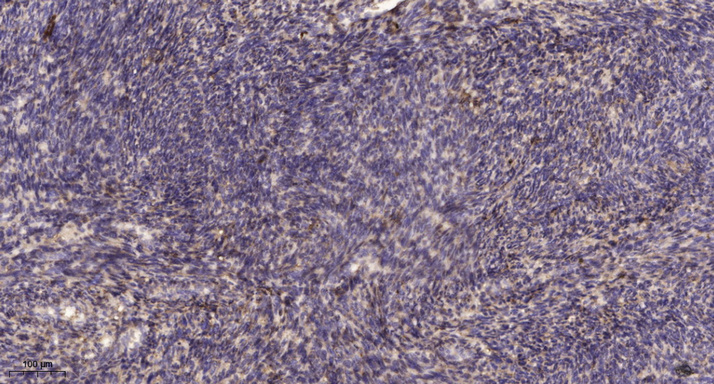

Anti-PGLYRP1 antibody (131-180 aa) (STJ97687)
SPECIFICATIONS
ClonalityPolyclonal
HostRabbit
ConjugationUnconjugated
IsotypeIgG
ImmunogenThe antiserum was produced against synthesized peptide derived from the Internal region of human PGLYRP1 at the amino acid range 131-180
General Information
| Short Description | Rabbit polyclonal anti-Peptidoglycan recognition protein 1 (131-180 aa) for use in WB, ELISA and IHC in Human, Rat and Mouse samples. Datasheet included with dilution recommendations, and related reagents. |
| Applications | WB/ELISA/IHC |
| Host | Rabbit |
| Reactivity | Human/Rat/Mouse |
| Note | STRICTLY FOR FURTHER SCIENTIFIC RESEARCH USE ONLY (RUO). MUST NOT TO BE USED IN DIAGNOSTIC OR THERAPEUTIC APPLICATIONS. |
Product Properties
| Clonality | Polyclonal |
| Isotype | IgG |
| Conjugation | Unconjugated |
| Concentration | 1 mg/mL |
| Purification | The antibody was affinity-purified from rabbit antiserum by affinity-chromatography using epitope-specific immunogen. |
| Dilution Range | WB 1:500-2000IHC-P 1:50-300ELISA 2000-20000 |
| Formulation | Liquid in PBS containing 50% Glycerol, 0.5% BSA and 0.02% Sodium Azide. |
| Storage Instruction | Store at-20°C for up to 1 year from the date of receipt, and avoid repeat freeze-thaw cycles. |
Target Information
| Gene Symbol | PGLYRP1 |
| Gene ID | 8993 |
| Uniprot ID | PGRP1_HUMAN |
| Immunogen | The antiserum was produced against synthesized peptide derived from the Internal region of human PGLYRP1 at the amino acid range 131-180 |
| Immunogen Region | 131-180 aa |
| Specificity | PGLYRP1 Polyclonal Antibody detects endogenous levels of PGLYRP1 protein. |
Additional Info
| Post Translational Modifications | N-glycosylated. N-glycosylation is required for bactericidal activity. |
| Function | Innate immunity protein that plays several important functions in antimicrobial and antitumor defense systems. Acts as a pattern receptor that binds to murein peptidoglycans (PGN) of Gram-positive bacteria and thus provides bactericidal activity. Forms an equimolar complex with heat shock protein HSPA1A and induces programmed cell death through apoptosis and necroptosis in tumor cell lines by activating the TNFR1 receptor on the target cell membrane. In addition, acts in complex with the Ca(2+)-binding protein S100A4 as a chemoattractant able to induce lymphocyte movement. Mechanistically, this complex acts as a ligand of the chemotactic receptors CCR5 and CXCR3 which are present on the cells of the immune system. Also promotes the activation of lymphocytes that become able to kill virus-infected cells as well as tumor cells by modulating the spectrum of their target-cell specificity. Induction of cytotoxicity on monocyte surface requires interaction with TREM1 receptor. |
| Protein Name | Peptidoglycan Recognition Protein 1Peptidoglycan Recognition Protein ShortPgrp-S |
| Database Links | Reactome: R-HSA-6798695Reactome: R-HSA-6803157 |
| Cellular Localisation | SecretedCytoplasmic Granule |
| Alternative Antibody Names | Anti-Peptidoglycan Recognition Protein 1 antibodyAnti-Peptidoglycan Recognition Protein Short antibodyAnti-Pgrp-S antibodyAnti-PGLYRP1 antibodyAnti-PGLYRP antibodyAnti-PGRP antibodyAnti-TNFSF3L antibodyAnti-SBBI68 antibodyAnti-UNQ639 antibodyAnti-PRO1269 antibody |
Information sourced from Uniprot.org