

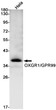
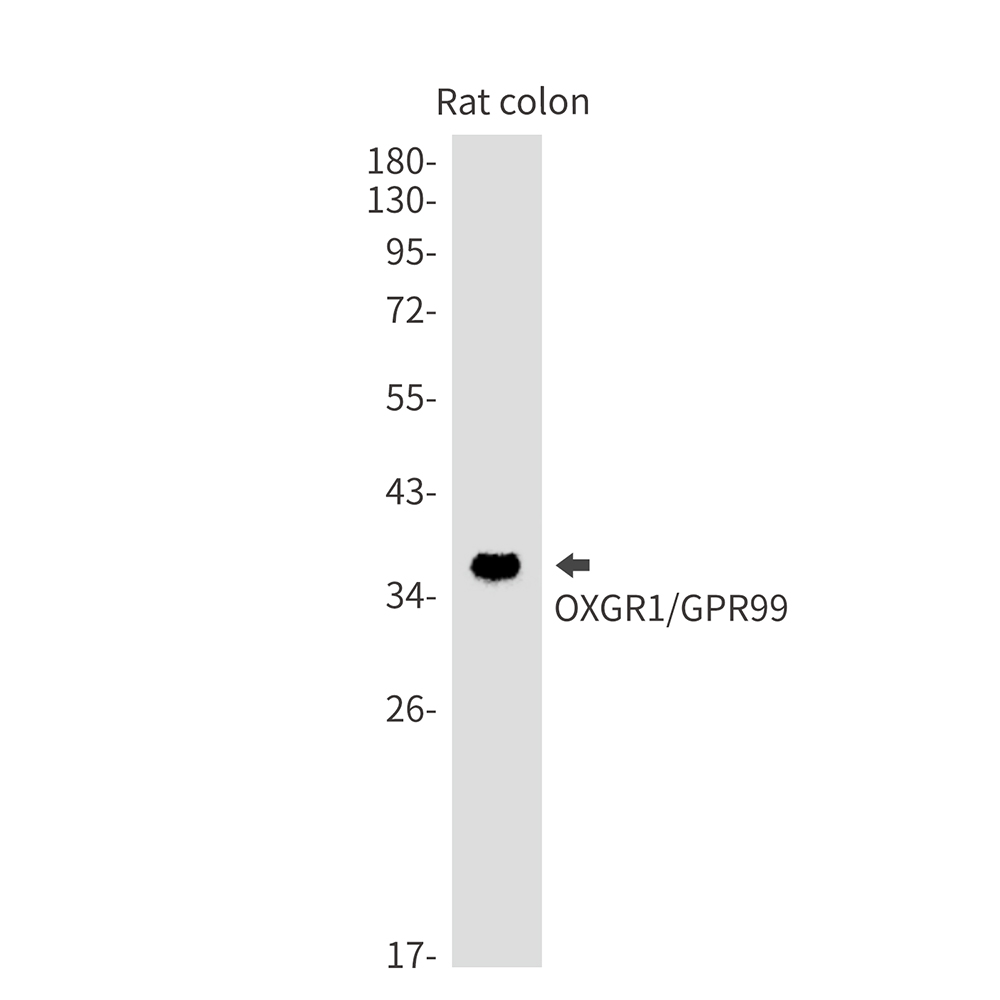
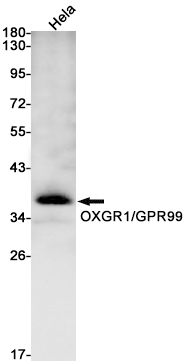

Anti-OXGR1 antibody [R02-4F1] (STJA0033805)
SPECIFICATIONS
ClonalityMonoclonal
HostRabbit
ConjugationUnconjugated
IsotypeIgG
ImmunogenA synthetic peptide of human OXGR1
General Information
| Short Description | Rabbit monoclonal anti-OXGR1 for use in WB in Human and Rat samples. Datasheet included with dilution recommendations, and related reagents. |
| Applications | WB |
| Host | Rabbit |
| Reactivity | Human/Rat |
| Note | STRICTLY FOR FURTHER SCIENTIFIC RESEARCH USE ONLY (RUO). MUST NOT TO BE USED IN DIAGNOSTIC OR THERAPEUTIC APPLICATIONS. |
Product Properties
| Clonality | Monoclonal |
| Clone ID | R02-4F1 |
| Isotype | IgG |
| Conjugation | Unconjugated |
| Concentration | 0.3 mg/mL |
| Purification | Affinity Purified |
| Dilution Range | WB 1:500-1:1000 |
| Formulation | 50mM Tris-Glycine (pH 7.4) , 0.15M NaCl, 40% Glycerol, 0.01% Sodium azide and 0.05% BSA |
| Storage Instruction | Store at 4°C short term. Aliquot and store at-20°C long term. Avoid freeze/thaw cycles. |
Target Information
| Gene Symbol | OXGR1 |
| Gene ID | 27199 |
| Uniprot ID | OXGR1_HUMAN |
| Immunogen | A synthetic peptide of human OXGR1 |
Additional Info
| Tissue Specificity | Detected in kidney and, to a lower extent, in placenta. Not detected in brain tissues including the frontal cortex, caudate putamen, thalamus, hypothalamus, hippocampus or pons. |
| Function | G protein-coupled receptor for dicarboxylates and amino dicarboxylates. Receptor for itaconate, a metabolite produced by myeloid lineages. In the respiratory epithelium, couples the binding of itaconate to the activation of GNA11 and downstream intracellular Ca(2+) release, leading to mucocilliary clearance of airborne pathogens. Receptor for leukotriene E4 (LTE4) produced by mast cells upon allergic inflammation. Binds with high affinity to LTE4 and elicits mucin release from pulmonary epithelium in response to airborne fungi allergens. Regulates mucin-producing goblet cell homeostasis. Receptor for alpha-ketoglutarate produced by proximal tubule renal cells upon metabolic alkalosis. In an intrarenal paracrine signaling pathway, binds alpha-ketoglutarate and drives transepithelial salt reabsorption and bicarbonate secretion by SLC26A4/pendrin-positive intercalated cells. |
| Protein Name | 2-Oxoglutarate Receptor 1Alpha-Ketoglutarate Receptor 1G-Protein Coupled Receptor 80G-Protein Coupled Receptor 99P2y Purinoceptor 15P2y15P2y-Like GpcrP2y-Like Nucleotide Receptor |
| Database Links | Reactome: R-HSA-373076Reactome: R-HSA-418594 |
| Cellular Localisation | Cell MembraneMulti-Pass Membrane ProteinUpon Itaconate BindingInternalizes Via Endocytosis In A Beta-Arrestin Dependent Manner |
| Alternative Antibody Names | Anti-2-Oxoglutarate Receptor 1 antibodyAnti-Alpha-Ketoglutarate Receptor 1 antibodyAnti-G-Protein Coupled Receptor 80 antibodyAnti-G-Protein Coupled Receptor 99 antibodyAnti-P2y Purinoceptor 15 antibodyAnti-P2y15 antibodyAnti-P2y-Like Gpcr antibodyAnti-P2y-Like Nucleotide Receptor antibodyAnti-OXGR1 antibodyAnti-GPR80 antibodyAnti-GPR99 antibodyAnti-P2RY15 antibodyAnti-P2Y15 antibody |
Information sourced from Uniprot.org