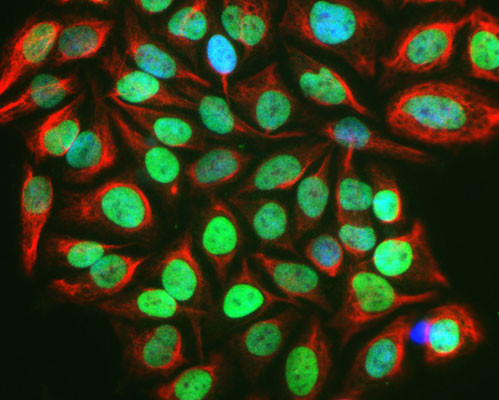
| Tissue Specificity | Highest levels found in spleen and brain. Intermediate levels seen in thymus, ovary, lung and heart. Very low levels seen in kidney, skeletal muscle and liver. |
| Post Translational Modifications | Acetylated at Lys-165 by KAT5.acetylation is required for its subsequent phosphorylation. Deacetylated by SIRT2. Phosphorylation by PKC displaces MARCKS from the membrane. It also inhibits the F-actin cross-linking activity. Myristoylated. A proper myristoylation is essential for the proper distribution to the plasma membrane. |
| Function | Membrane-associated protein that plays a role in the structural modulation of the actin cytoskeleton, chemotaxis, motility, cell adhesion, phagocytosis, and exocytosis through lipid sequestering and/or protein docking to membranes. Thus, exerts an influence on a plethora of physiological processes, such as embryonic development, tissue regeneration, neuronal plasticity, and inflammation. Sequesters phosphatidylinositol 4,5-bisphosphate (PIP2) at lipid rafts in the plasma membrane of quiescent cells, an action reversed by protein kinase C, ultimately inhibiting exocytosis. During inflammation, promotes the migration and adhesion of inflammatory cells and the secretion of cytokines such as tumor necrosis factor (TNF), particularly in macrophages. Plays an essential role in bacteria-induced intracellular reactive oxygen species (ROS) formation in the monocytic cell type. Participates in the regulation of neurite initiation and outgrowth by interacting with components of cellular machinery including CDC42 that regulates cell shape and process extension through modulation of the cytoskeleton. Plays also a role in axon development by mediating docking and fusion of RAB10-positive vesicles with the plasma membrane. |
| Protein Name | Myristoylated Alanine-Rich C-Kinase SubstrateMarcksProtein Kinase C Substrate 80 Kda Protein |
| Cellular Localisation | Cell MembraneLipid-AnchorCytoplasmCytoskeletonPkc-Dependent Phosphorylation Displaces Marcks From The Cell Membrane And Subsequent Dephosphorylation Is Accompanied By Its Reassociation With The Membrane |
| Alternative Antibody Names | Anti-Myristoylated Alanine-Rich C-Kinase Substrate antibodyAnti-Marcks antibodyAnti-Protein Kinase C Substrate 80 Kda Protein antibodyAnti-Marcks antibodyAnti-Macs antibody |
Information sourced from Uniprot.org