


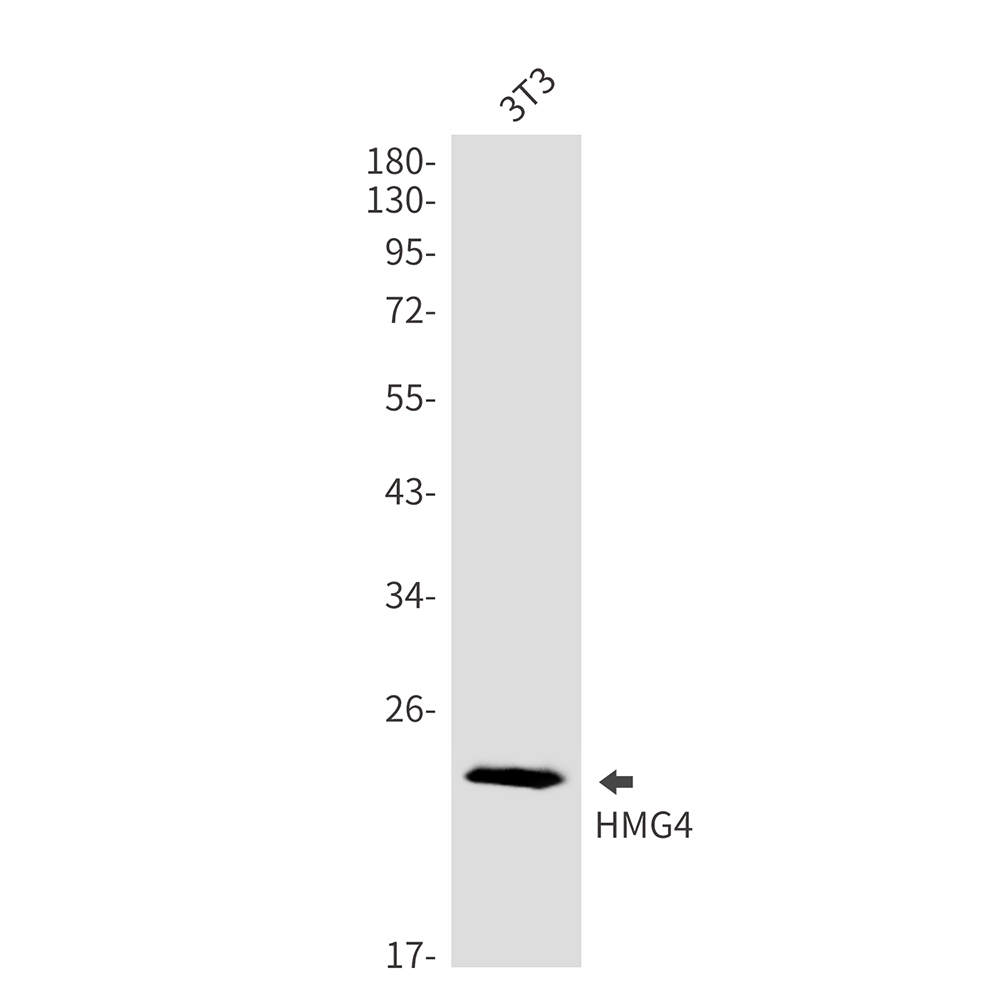
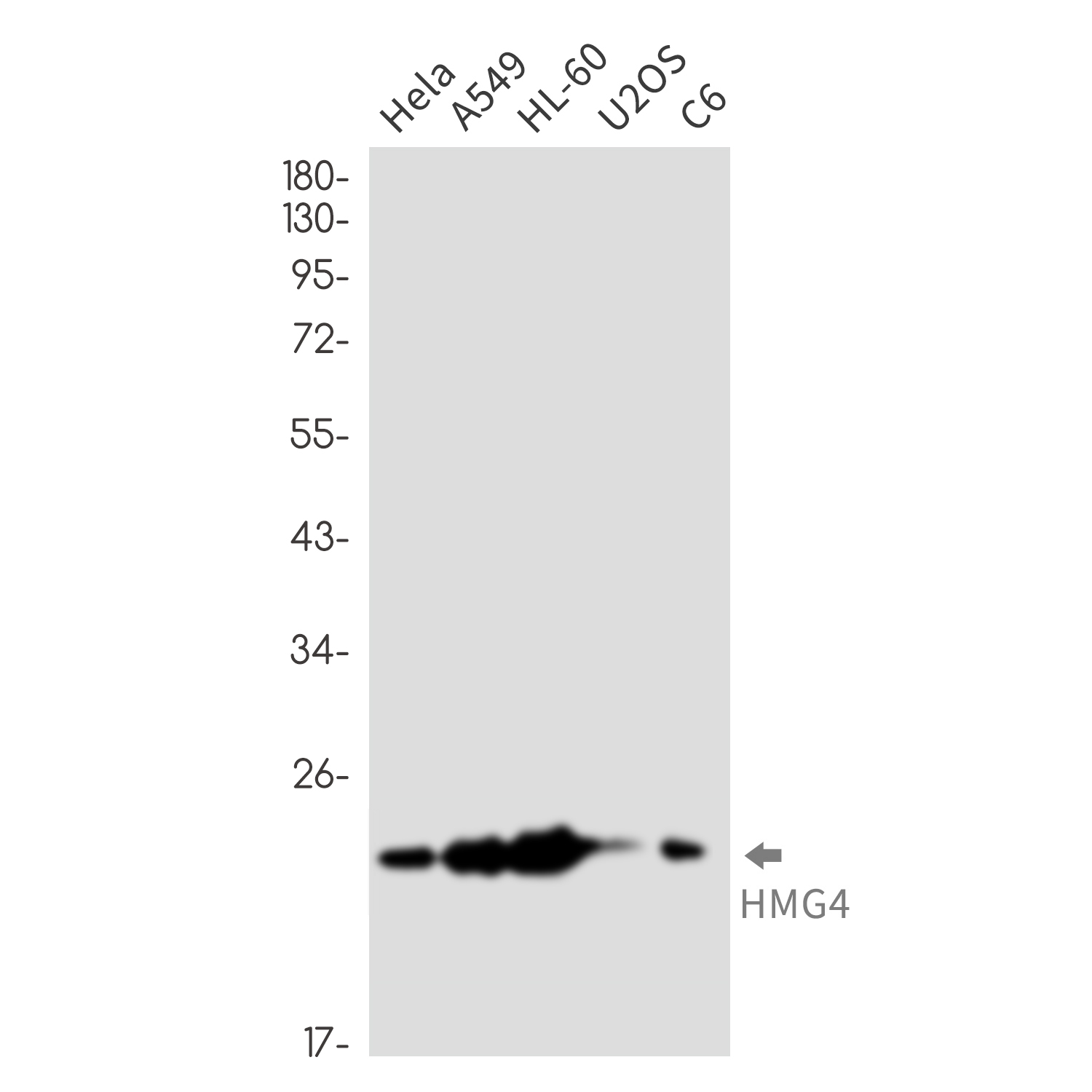
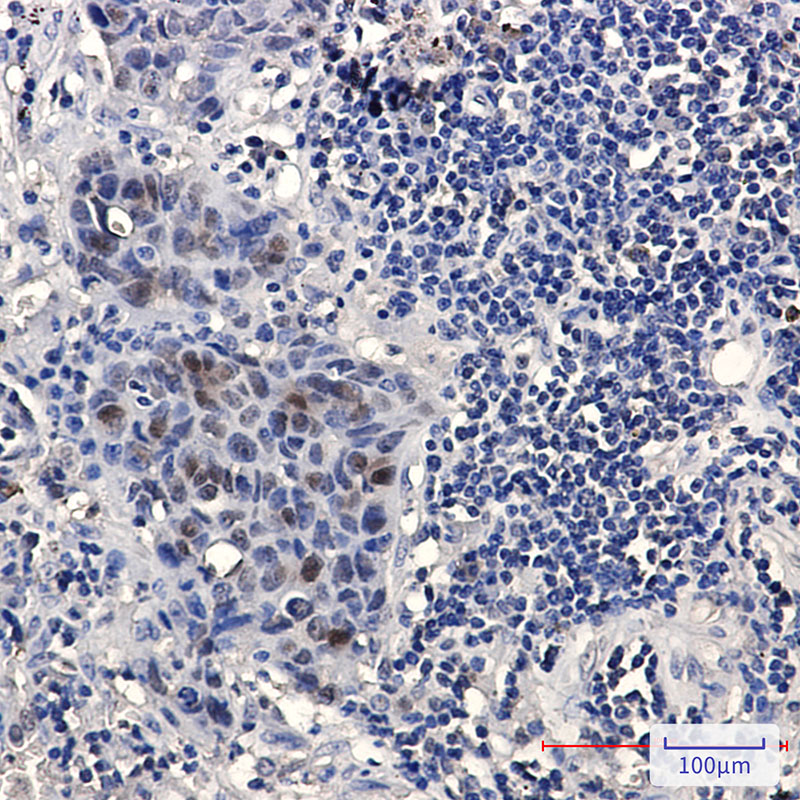

Anti-HMG4 antibody [R08-1C7] (STJA0035226)
SPECIFICATIONS
ClonalityMonoclonal
HostRabbit
ConjugationUnconjugated
IsotypeIgG
ImmunogenA synthetic peptide of human HMG4
General Information
| Short Description | Rabbit monoclonal anti-HMG4 for use in WB, IHC-P and IP in Human, Mouse and Rat samples. Datasheet included with dilution recommendations, and related reagents. |
| Applications | WB/IHC-P/IP |
| Host | Rabbit |
| Reactivity | Human/Mouse/Rat |
| Note | STRICTLY FOR FURTHER SCIENTIFIC RESEARCH USE ONLY (RUO). MUST NOT TO BE USED IN DIAGNOSTIC OR THERAPEUTIC APPLICATIONS. |
Product Properties
| Clonality | Monoclonal |
| Clone ID | R08-1C7 |
| Isotype | IgG |
| Conjugation | Unconjugated |
| Concentration | 0.3 mg/mL |
| Purification | Affinity Purified |
| Dilution Range | WB 1:500-1:1000IHC 1:50-1:100IP 1:20 |
| Formulation | 50mM Tris-Glycine (pH 7.4) , 0.15M NaCl, 40% Glycerol, 0.01% Sodium azide and 0.05% BSA |
| Storage Instruction | Store at 4°C short term. Aliquot and store at-20°C long term. Avoid freeze/thaw cycles. |
Target Information
| Gene Symbol | HMGB3 |
| Gene ID | 3149 |
| Uniprot ID | HMGB3_HUMAN |
| Immunogen | A synthetic peptide of human HMG4 |
Additional Info
| Tissue Specificity | Expressed predominantly in placenta. |
| Post Translational Modifications | Reduction/oxidation of cysteine residues Cys-23, Cys-45 and Cys-104 and a possible intramolecular disulfide bond involving Cys-23 and Cys-45 give rise to different redox forms with specific functional activities in various cellular compartments: 1- fully reduced HMGB3 (HMGB3C23hC45hC104h), 2- disulfide HMGB3 (HMGB3C23-C45C104h) and 3- sulfonyl HMGB3 (HMGB3C23soC45soC104so). |
| Function | Multifunctional protein with various roles in different cellular compartments. May act in a redox sensitive manner. Associates with chromatin and binds DNA with a preference for non-canonical DNA structures such as single-stranded DNA. Can bend DNA and enhance DNA flexibility by looping thus providing a mechanism to promote activities on various gene promoters. Proposed to be involved in the innate immune response to nucleic acids by acting as a cytoplasmic promiscuous immunogenic DNA/RNA sensor. Negatively regulates B-cell and myeloid cell differentiation. In hematopoietic stem cells may regulate the balance between self-renewal and differentiation. Involved in negative regulation of canonical Wnt signaling. |
| Protein Name | High Mobility Group Protein B3High Mobility Group Protein 2aHmg-2aHigh Mobility Group Protein 4Hmg-4 |
| Database Links | |
| Cellular Localisation | NucleusChromosomeCytoplasm |
| Alternative Antibody Names | Anti-High Mobility Group Protein B3 antibodyAnti-High Mobility Group Protein 2a antibodyAnti-Hmg-2a antibodyAnti-High Mobility Group Protein 4 antibodyAnti-Hmg-4 antibodyAnti-HMGB3 antibodyAnti-HMG2A antibodyAnti-HMG4 antibody |
Information sourced from Uniprot.org