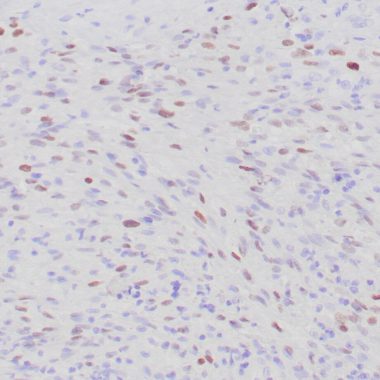
| Background | Zeta HHV8 Antibody. Zeta s recombinant mouse antibody recognizes HHV8, which encodes a latent nuclear antigen (LNA) , which is the product of the viral gene orf 73. LNA is capable of forming a complex with retinoblastoma susceptibility gene product, which may be related to its oncogenic activity. HHV8 is associated with three different diseases observed in AIDS patients: Kaposi s sarcoma, primary effusion lymphoma (which is a rare type of non-Hodgkin lymphoma affecting the body cavities) and multicentric Castleman s disease. HHV8 is the likely etiological agent of Kaposi s sarcoma. Zeta Corporation is a leader in recombinant monoclonal IVD antibodies for immunohistochemistry (IHC) offering 400+ tumor and tissue specific relevant products developed by a pathologist for pathologists. Visit Precision Recombinant Antibodies – IVD Antibodies – About Zeta Corporation (zeta-corp.com) to learn more about Zeta Corporation. |
Information sourced from Uniprot.org


![Anti-HHV-8 antibody [13B10] (STJ16100377)](https://cdn11.bigcommerce.com/s-zso2xnchw9/images/stencil/600x533/products/149094/346712/STJ16100377_1__02867.1681998799.jpg?c=1 "Anti-HHV-8 antibody [13B10] (STJ16100377)")