


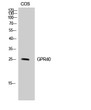


Anti-FFAR1 antibody (185-234 aa) (STJ93384)
SPECIFICATIONS
ClonalityPolyclonal
HostRabbit
ConjugationUnconjugated
IsotypeIgG
ImmunogenThe antiserum was produced against synthesized peptide derived from the human FFAR1 at the amino acid range 185-234
General Information
| Short Description | Rabbit polyclonal anti-Free fatty acid receptor 1 (185-234 aa) for use in WB, IF and ELISA in Human and Monkey samples. Datasheet included with dilution recommendations, and related reagents. |
| Applications | WB/IF/ELISA |
| Host | Rabbit |
| Reactivity | Human/Monkey |
| Note | STRICTLY FOR FURTHER SCIENTIFIC RESEARCH USE ONLY (RUO). MUST NOT TO BE USED IN DIAGNOSTIC OR THERAPEUTIC APPLICATIONS. |
Product Properties
| Clonality | Polyclonal |
| Isotype | IgG |
| Conjugation | Unconjugated |
| Concentration | 1 mg/mL |
| Purification | The antibody was affinity-purified from rabbit antiserum by affinity-chromatography using epitope-specific immunogen. |
| Dilution Range | WB 1:500-1:2000IF 1:200-1:1000ELISA 1:10000 |
| Formulation | Liquid in PBS containing 50% Glycerol, 0.5% BSA and 0.02% Sodium Azide. |
| Storage Instruction | Store at-20°C for up to 1 year from the date of receipt, and avoid repeat freeze-thaw cycles. |
Target Information
| Gene Symbol | FFAR1 |
| Gene ID | 2864 |
| Uniprot ID | FFAR1_HUMAN |
| Immunogen | The antiserum was produced against synthesized peptide derived from the human FFAR1 at the amino acid range 185-234 |
| Immunogen Region | 185-234 aa |
| Specificity | GPR40 Polyclonal Antibody detects endogenous levels of GPR40 protein. |
Additional Info
| Function | G-protein coupled receptor for medium and long chain saturated and unsaturated fatty acids that plays an important role in glucose homeostasis. Fatty acid binding increases glucose-stimulated insulin secretion, and may also enhance the secretion of glucagon-like peptide 1 (GLP-1). May also play a role in bone homeostasis.receptor signaling activates pathways that inhibit osteoclast differentiation. Ligand binding leads to a conformation change that triggers signaling via G-proteins that activate phospholipase C, leading to an increase of the intracellular calcium concentration. Seems to act through a G(q) and G(i)-mediated pathway. Mediates the anti-inflammatory effects of omega-3 polyunsaturated fatty acids (PUFAs) via inhibition of NLRP3 inflammasome activation. |
| Protein Name | Free Fatty Acid Receptor 1G-Protein Coupled Receptor 40 |
| Database Links | Reactome: R-HSA-381771Reactome: R-HSA-400511Reactome: R-HSA-416476Reactome: R-HSA-434316Reactome: R-HSA-444209 |
| Cellular Localisation | Cell MembraneMulti-Pass Membrane Protein |
| Alternative Antibody Names | Anti-Free Fatty Acid Receptor 1 antibodyAnti-G-Protein Coupled Receptor 40 antibodyAnti-FFAR1 antibodyAnti-GPR40 antibody |
Information sourced from Uniprot.org