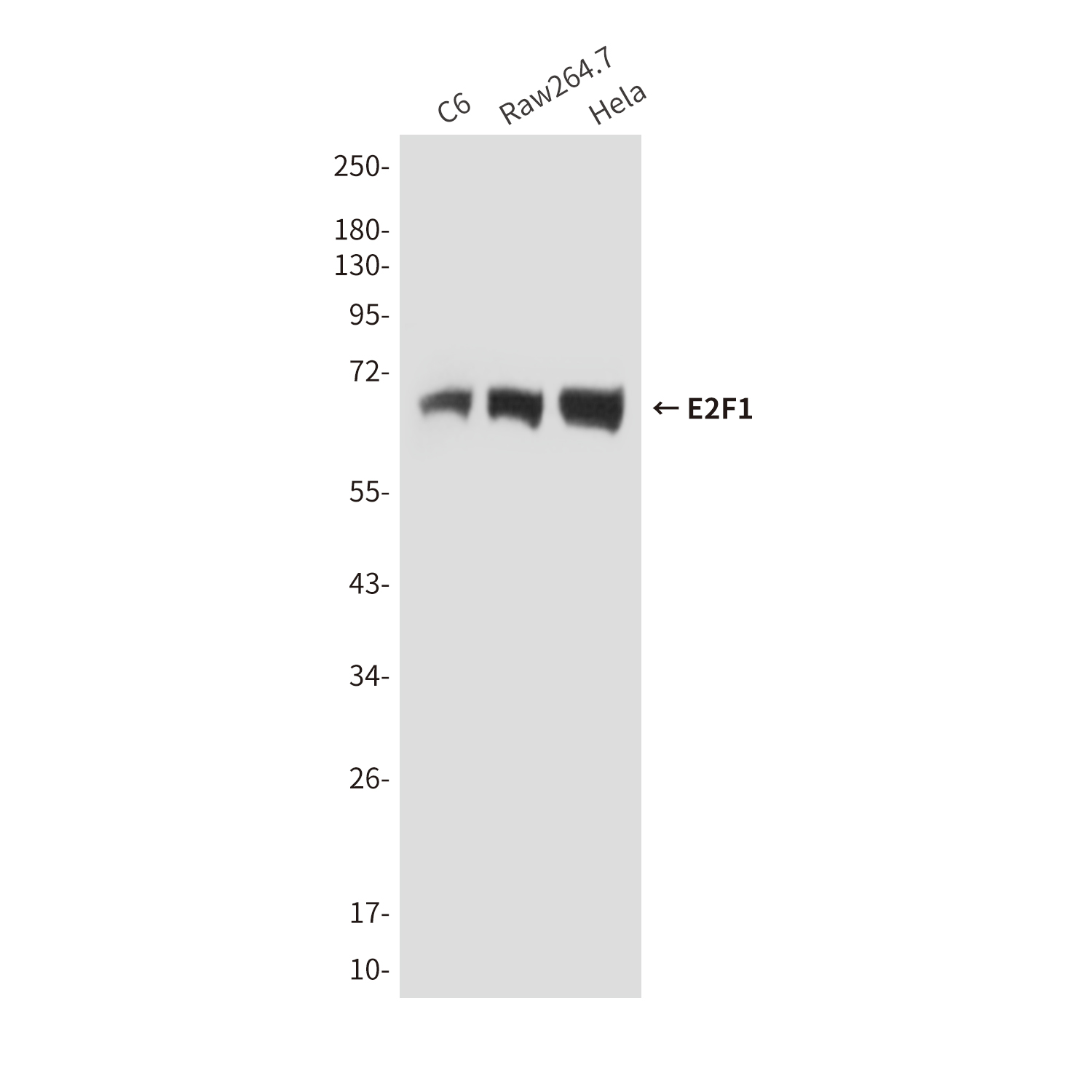
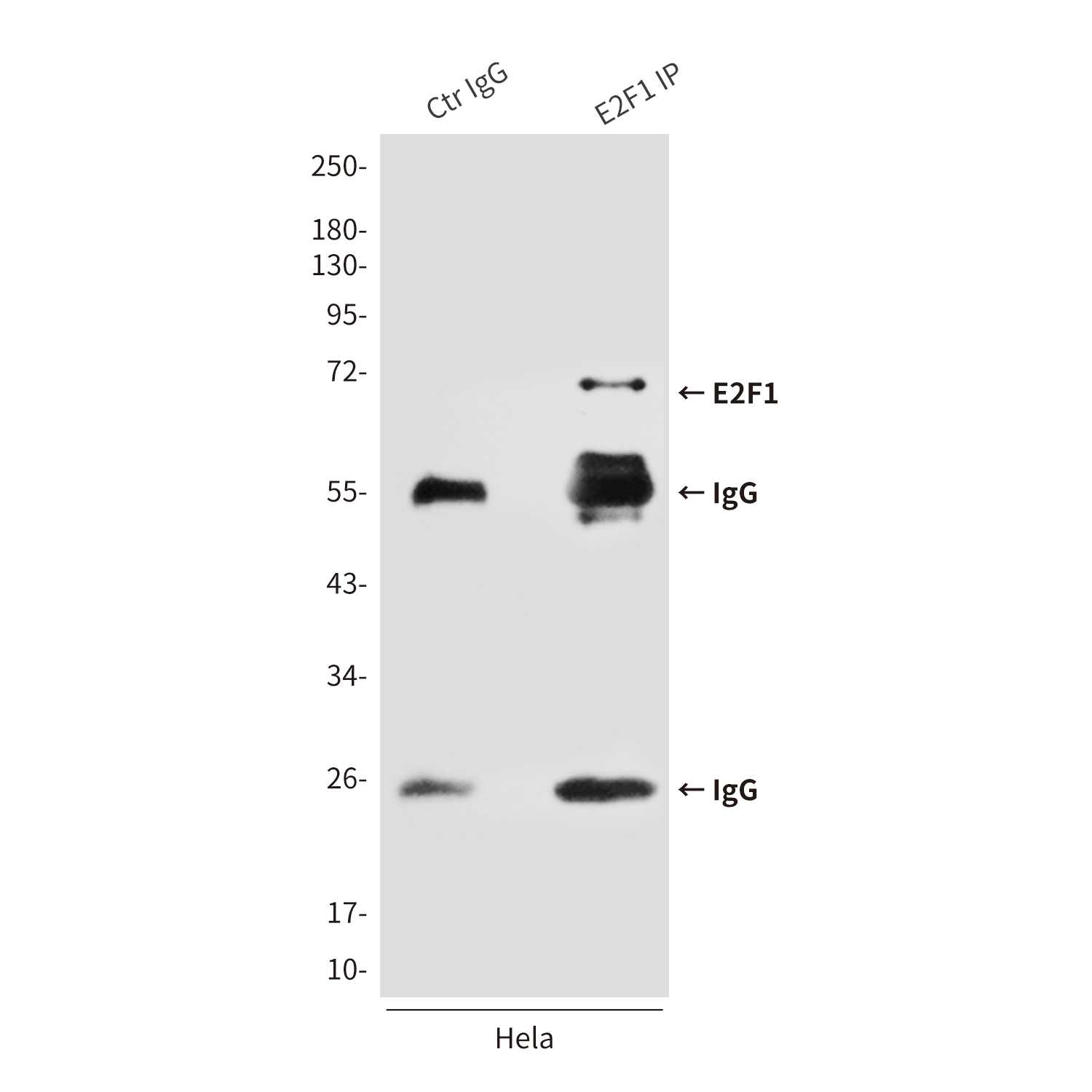
| Post Translational Modifications | Phosphorylated by CDK2 and cyclin A-CDK2 in the S-phase. Phosphorylation at Ser-364 by CHEK2 stabilizes E2F1 upon DNA damage and regulates its effect on transcription and apoptosis. Phosphorylation at Ser-403 by GSK3B promotes interaction with USP11, leading to its deubiquitination and stabilization. Ubiquitinated via 'Lys-63'-linked ubiquitin, leading to its degradation. Deubiquitinated by USP11 following phosphorylation by GSK3B, promoting its stability. Acetylation stimulates DNA-binding. Enhanced under stress conditions such as DNA damage and inhibited by retinoblastoma protein RB1. Regulated by KAP1/TRIM28 which recruits HDAC1 to E2F1 resulting in deacetylation. Acetylated by P/CAF/KAT2B. Methylation at Lys-185 by SETD7 promotes E2F1 ubiquitin-dependent proteasomal degradation. |
| Function | Transcription activator that binds DNA cooperatively with DP proteins through the E2 recognition site, 5'-TTTCCGCGC-3' found in the promoter region of a number of genes whose products are involved in cell cycle regulation or in DNA replication. The DRTF1/E2F complex functions in the control of cell-cycle progression from G1 to S phase. E2F1 binds preferentially RB1 in a cell-cycle dependent manner. It can mediate both cell proliferation and TP53/p53-dependent apoptosis. Blocks adipocyte differentiation by binding to specific promoters repressing CEBPA binding to its target gene promoters. Directly activates transcription of PEG10. Positively regulates transcription of RRP1B. |
| Protein Name | Transcription Factor E2f1E2f-1Pbr3Retinoblastoma-Associated Protein 1Rbap-1Retinoblastoma-Binding Protein 3Rbbp-3Prb-Binding Protein E2f-1 |
| Database Links | Reactome: R-HSA-111448Reactome: R-HSA-113501Reactome: R-HSA-1362277Reactome: R-HSA-1362300Reactome: R-HSA-139915Reactome: R-HSA-1912408Reactome: R-HSA-2559580Reactome: R-HSA-2559585Reactome: R-HSA-6804116Reactome: R-HSA-68911Reactome: R-HSA-69202Reactome: R-HSA-69205Reactome: R-HSA-69231Reactome: R-HSA-69656Reactome: R-HSA-8953750Reactome: R-HSA-9616222Reactome: R-HSA-9661069 |
| Cellular Localisation | Nucleus |
| Alternative Antibody Names | Anti-Transcription Factor E2f1 antibodyAnti-E2f-1 antibodyAnti-Pbr3 antibodyAnti-Retinoblastoma-Associated Protein 1 antibodyAnti-Rbap-1 antibodyAnti-Retinoblastoma-Binding Protein 3 antibodyAnti-Rbbp-3 antibodyAnti-Prb-Binding Protein E2f-1 antibodyAnti-E2F1 antibodyAnti-RBBP3 antibody |
Information sourced from Uniprot.org