



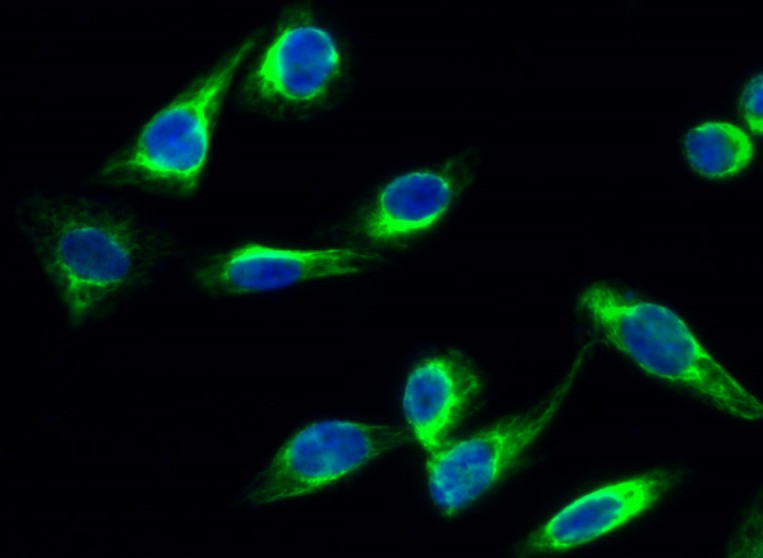

Anti-CYP17A1 antibody (221-270 aa) (STJ92554)
SPECIFICATIONS
ClonalityPolyclonal
HostRabbit
ConjugationUnconjugated
IsotypeIgG
ImmunogenThe antiserum was produced against synthesized peptide derived from the human Cytochrome P450 17A1 at the amino acid range 221-270
General Information
| Short Description | Rabbit polyclonal anti-Steroid 17-alpha-hydroxylase/17, 20 lyase (221-270 aa) for use in WB, IHC, IF and ELISA in Human samples. Datasheet included with dilution recommendations, and related reagents. |
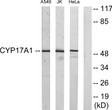
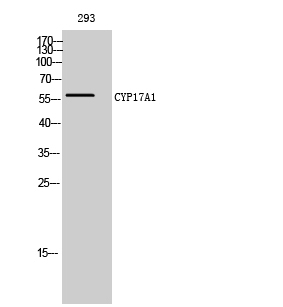
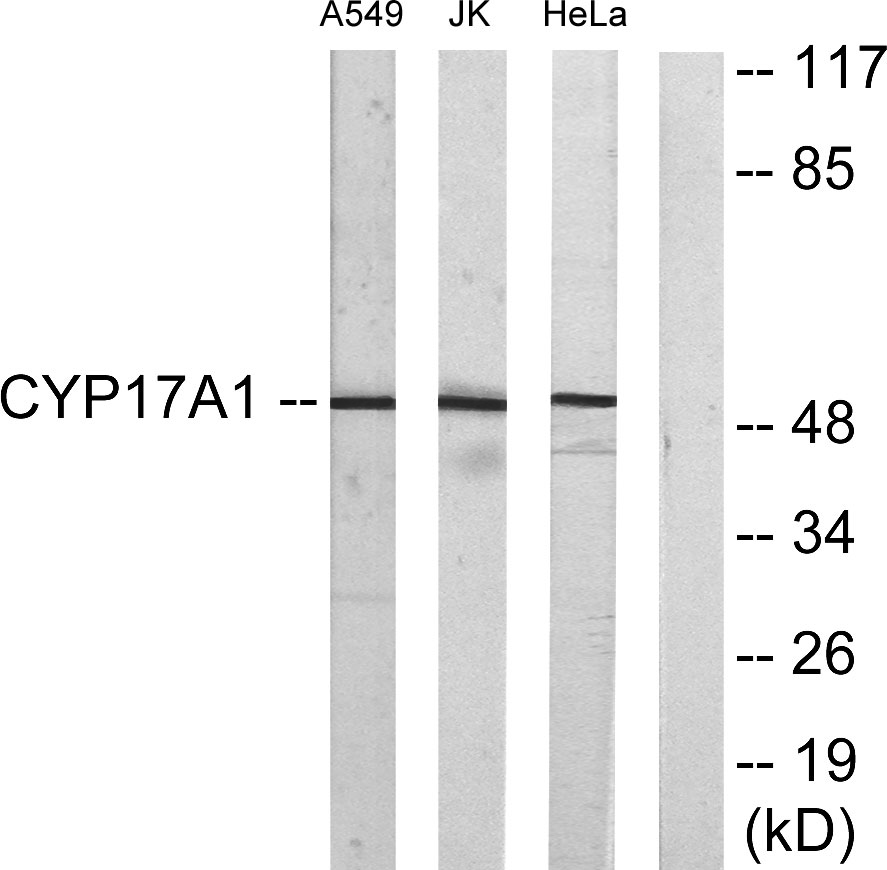
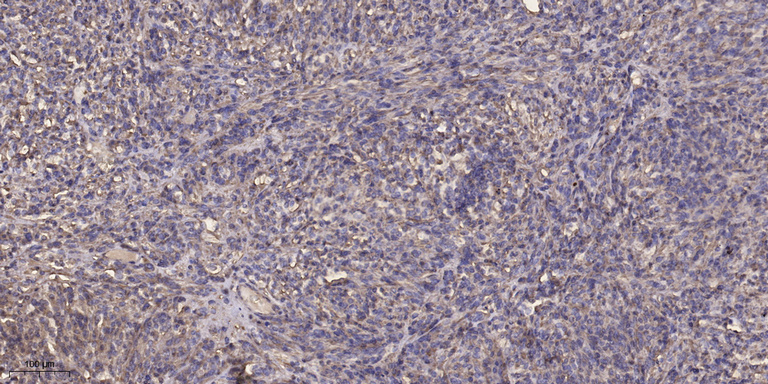
| Applications | WB/IHC/IF/ELISA |
| Host | Rabbit |
| Reactivity | Human |
| Note | STRICTLY FOR FURTHER SCIENTIFIC RESEARCH USE ONLY (RUO). MUST NOT TO BE USED IN DIAGNOSTIC OR THERAPEUTIC APPLICATIONS. |
Product Properties
| Clonality | Polyclonal |
| Isotype | IgG |
| Conjugation | Unconjugated |
| Concentration | 1 mg/mL |
| Purification | The antibody was affinity-purified from rabbit antiserum by affinity-chromatography using epitope-specific immunogen. |
| Dilution Range | WB 1:500-1:2000IHC 1:100-1:300IF 1:200-1:1000ELISA 1:10000 |
| Formulation | Liquid in PBS containing 50% Glycerol, 0.5% BSA and 0.02% Sodium Azide. |
| Storage Instruction | Store at-20°C for up to 1 year from the date of receipt, and avoid repeat freeze-thaw cycles. |
Target Information
| Gene Symbol | CYP17A1 |
| Gene ID | 1586 |
| Uniprot ID | CP17A_HUMAN |
| Immunogen | The antiserum was produced against synthesized peptide derived from the human Cytochrome P450 17A1 at the amino acid range 221-270 |
| Immunogen Region | 221-270 aa |
| Specificity | CYP17A1 Polyclonal Antibody detects endogenous levels of CYP17A1 protein. |
Additional Info
| Function | A cytochrome P450 monooxygenase involved in corticoid and androgen biosynthesis. Catalyzes 17-alpha hydroxylation of C21 steroids, which is common for both pathways. A second oxidative step, required only for androgen synthesis, involves an acyl-carbon cleavage. The 17-alpha hydroxy intermediates, as part of adrenal glucocorticoids biosynthesis pathway, are precursors of cortisol (Probable). Hydroxylates steroid hormones, pregnenolone and progesterone to form 17-alpha hydroxy metabolites, followed by the cleavage of the C17-C20 bond to form C19 steroids, dehydroepiandrosterone (DHEA) and androstenedione. Has 16-alpha hydroxylase activity. Catalyzes 16-alpha hydroxylation of 17-alpha hydroxy pregnenolone, followed by the cleavage of the C17-C20 bond to form 16-alpha-hydroxy DHEA. Also 16-alpha hydroxylates androgens, relevant for estriol synthesis. Mechanistically, uses molecular oxygen inserting one oxygen atom into a substrate, and reducing the second into a water molecule, with two electrons provided by NADPH via cytochrome P450 reductase (CPR.NADPH-ferrihemoprotein reductase). |
| Protein Name | Steroid 17-Alpha-Hydroxylase/17 -20 Lyase17-Alpha-Hydroxyprogesterone AldolaseCypxviiCytochrome P450 17a1Cytochrome P450-C17Cytochrome P450c17Steroid 17-Alpha-Monooxygenase |
| Database Links | Reactome: R-HSA-193048Reactome: R-HSA-194002Reactome: R-HSA-5579028 |
| Cellular Localisation | Endoplasmic Reticulum MembraneMicrosome Membrane |
| Alternative Antibody Names | Anti-Steroid 17-Alpha-Hydroxylase/17 -20 Lyase antibodyAnti-17-Alpha-Hydroxyprogesterone Aldolase antibodyAnti-Cypxvii antibodyAnti-Cytochrome P450 17a1 antibodyAnti-Cytochrome P450-C17 antibodyAnti-Cytochrome P450c17 antibodyAnti-Steroid 17-Alpha-Monooxygenase antibodyAnti-CYP17A1 antibodyAnti-CYP17 antibodyAnti-S17AH antibody |
Information sourced from Uniprot.org