


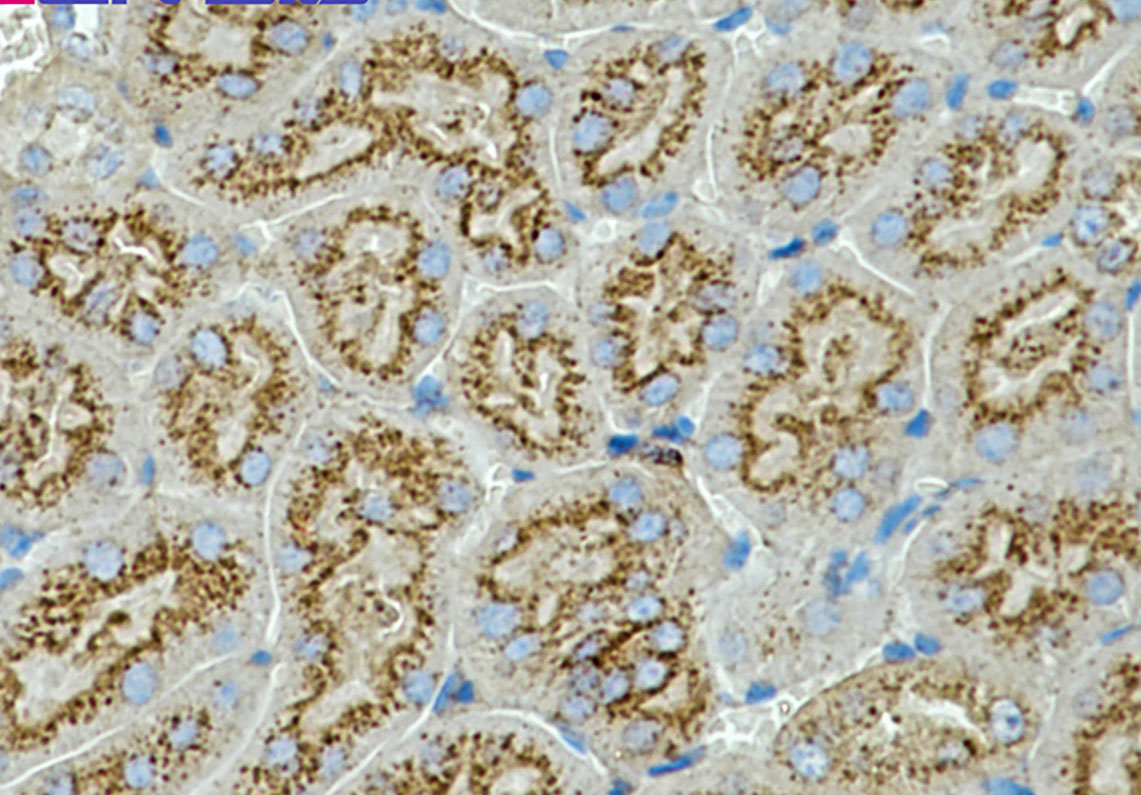
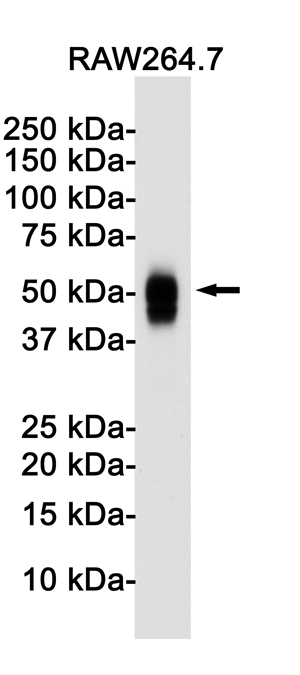

Anti-CD63 antibody [R06-4G3] (STJA0033952)
SPECIFICATIONS
ClonalityMonoclonal
HostRabbit
ConjugationUnconjugated
IsotypeIgG
ImmunogenA synthetic peptide of mouse CD63
General Information
| Short Description | Rabbit monoclonal anti-CD63 for use in WB and IHC-P in Human and Mouse samples. Datasheet included with dilution recommendations, and related reagents. |
| Applications | WB/IHC-P |
| Host | Rabbit |
| Reactivity | Human/Mouse |
| Note | STRICTLY FOR FURTHER SCIENTIFIC RESEARCH USE ONLY (RUO). MUST NOT TO BE USED IN DIAGNOSTIC OR THERAPEUTIC APPLICATIONS. |
Product Properties
| Clonality | Monoclonal |
| Clone ID | R06-4G3 |
| Isotype | IgG |
| Conjugation | Unconjugated |
| Concentration | 0.3 mg/mL |
| Purification | Affinity Purified |
| Dilution Range | WB 1:500-1:1000IHC 1:50-1:100 |
| Formulation | 50mM Tris-Glycine (pH 7.4) , 0.15M NaCl, 40% Glycerol, 0.01% Sodium azide and 0.05% BSA |
| Storage Instruction | Store at 4°C short term. Aliquot and store at-20°C long term. Avoid freeze/thaw cycles. |
Target Information
| Gene Symbol | Cd63 |
| Gene ID | 12512 |
| Uniprot ID | CD63_MOUSE |
| Immunogen | A synthetic peptide of mouse CD63 |
Additional Info
| Tissue Specificity | Ubiquitous. Strongly expressed in kidney. Detected in spleen, bone marrow, peripheral blood mononuclear cells and macrophages. |
| Post Translational Modifications | Palmitoylated at a low, basal level in unstimulated platelets. The level of palmitoylation increases when platelets are activated by thrombin (in vitro). |
| Function | Functions as a cell surface receptor for TIMP1 and plays a role in the activation of cellular signaling cascades. Plays a role in the activation of ITGB1 and integrin signaling, leading to the activation of AKT, FAK/PTK2 and MAP kinases. Promotes cell survival, reorganization of the actin cytoskeleton, cell adhesion, spreading and migration, via its role in the activation of AKT and FAK/PTK2. Plays a role in VEGFA signaling via its role in regulating the internalization of KDR/VEGFR2. Plays a role in intracellular vesicular transport processes, and is required for normal trafficking of the PMEL luminal domain that is essential for the development and maturation of melanocytes. Plays a role in the adhesion of leukocytes onto endothelial cells via its role in the regulation of SELP trafficking. May play a role in mast cell degranulation in response to Ms4a2/FceRI stimulation, but not in mast cell degranulation in response to other stimuli. |
| Protein Name | Cd63 AntigenCd Antigen Cd63 |
| Database Links | Reactome: R-MMU-114608Reactome: -MMU-6798695 |
| Cellular Localisation | Cell MembraneMulti-Pass Membrane ProteinLysosome MembraneLate Endosome MembraneEndosomeMultivesicular BodyMelanosomeSecretedExtracellular ExosomeCell SurfaceAlso Found In Weibel-Palade Bodies Of Endothelial CellsLocated In Platelet Dense GranulesDetected In A Subset Of Pre-MelanosomesDetected On Intralumenal Vesicles (Ilvs) Within Multivesicular Bodies |
| Alternative Antibody Names | Anti-Cd63 Antigen antibodyAnti-Cd Antigen Cd63 antibodyAnti-Cd63 antibody |
Information sourced from Uniprot.org