
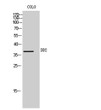
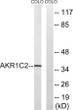
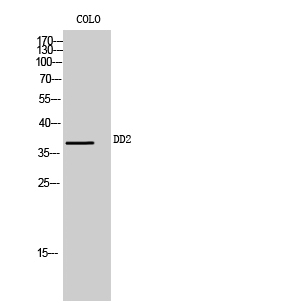
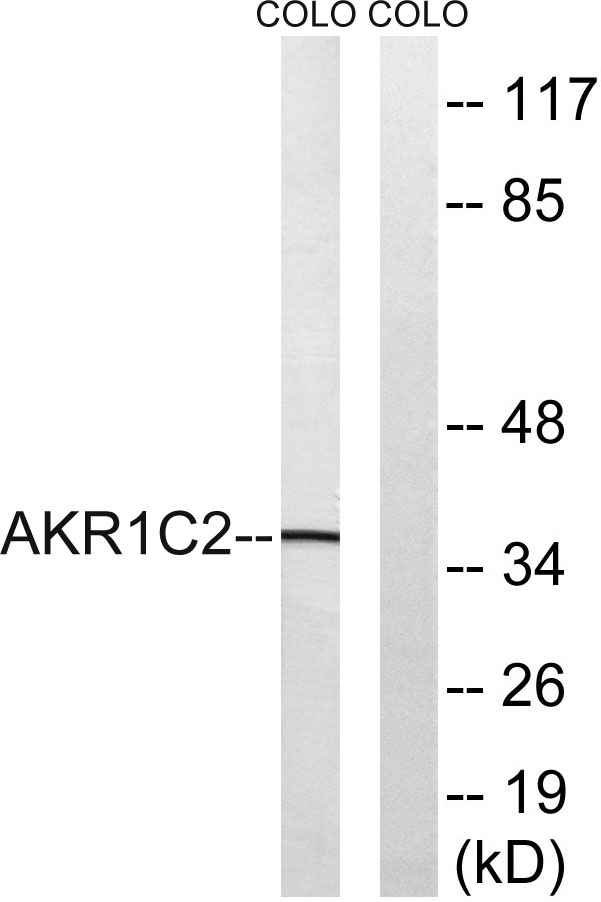
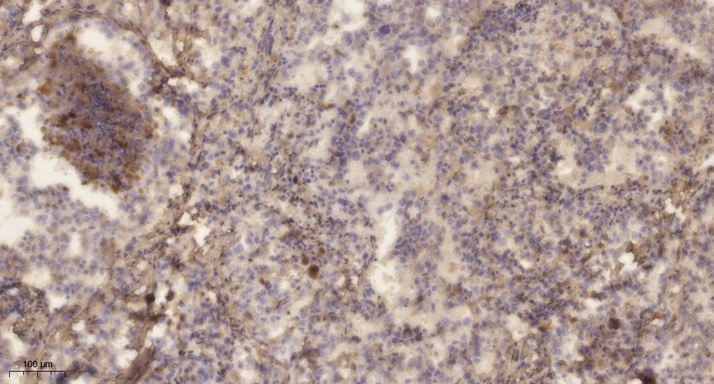

Anti-AKR1C2 antibody (21-70 aa) (STJ92670)
SPECIFICATIONS
ClonalityPolyclonal
HostRabbit
ConjugationUnconjugated
IsotypeIgG
ImmunogenThe antiserum was produced against synthesized peptide derived from the human AKR1C2 at the amino acid range 21-70
General Information
| Short Description | Rabbit polyclonal anti-Aldo-keto reductase family 1 member C2 (21-70 aa) for use in WB, IHC, IF and ELISA in Human, Rat and Mouse samples. Datasheet included with dilution recommendations, and related reagents. |
| Applications | WB/IHC/IF/ELISA |
| Host | Rabbit |
| Reactivity | Human/Rat/Mouse |
| Note | STRICTLY FOR FURTHER SCIENTIFIC RESEARCH USE ONLY (RUO). MUST NOT TO BE USED IN DIAGNOSTIC OR THERAPEUTIC APPLICATIONS. |
Product Properties
| Clonality | Polyclonal |
| Isotype | IgG |
| Conjugation | Unconjugated |
| Concentration | 1 mg/mL |
| Purification | The antibody was affinity-purified from rabbit antiserum by affinity-chromatography using epitope-specific immunogen. |
| Dilution Range | WB 1:500-1:2000IHC 1:100-1:300ELISA 1:20000IF 1:50-200 |
| Formulation | Liquid in PBS containing 50% Glycerol, 0.5% BSA and 0.02% Sodium Azide. |
| Storage Instruction | Store at-20°C for up to 1 year from the date of receipt, and avoid repeat freeze-thaw cycles. |
Target Information
| Gene Symbol | AKR1C2 |
| Gene ID | 1646 |
| Uniprot ID | AK1C2_HUMAN |
| Immunogen | The antiserum was produced against synthesized peptide derived from the human AKR1C2 at the amino acid range 21-70 |
| Immunogen Region | 21-70 aa |
| Specificity | DD2 Polyclonal Antibody detects endogenous levels of DD2 protein. |
Additional Info
| Function | Cytosolic aldo-keto reductase that catalyzes the NADH and NADPH-dependent reduction of ketosteroids to hydroxysteroids. Most probably acts as a reductase in vivo since the oxidase activity measured in vitro is inhibited by physiological concentrations of NADPH. Displays a broad positional specificity acting on positions 3, 17 and 20 of steroids and regulates the metabolism of hormones like estrogens and androgens. Works in concert with the 5-alpha/5-beta-steroid reductases to convert steroid hormones into the 3-alpha/5-alpha and 3-alpha/5-beta-tetrahydrosteroids. Catalyzes the inactivation of the most potent androgen 5-alpha-dihydrotestosterone (5-alpha-DHT) to 5-alpha-androstane-3-alpha,17-beta-diol (3-alpha-diol). Also specifically able to produce 17beta-hydroxy-5alpha-androstan-3-one/5alphaDHT. May also reduce conjugated steroids such as 5alpha-dihydrotestosterone sulfate. Displays affinity for bile acids. |
| Protein Name | Aldo-Keto Reductase Family 1 Member C2 3-Alpha-Hsd3Chlordecone Reductase Homolog HakrdDihydrodiol Dehydrogenase 2Dd-2Dd2Dihydrodiol Dehydrogenase/Bile Acid-Binding ProteinDd/BabpType Iii 3-Alpha-Hydroxysteroid Dehydrogenase |
| Database Links | Reactome: R-HSA-193368Reactome: R-HSA-193775Reactome: R-HSA-193807 |
| Cellular Localisation | CytoplasmCytosol |
| Alternative Antibody Names | Anti-Aldo-Keto Reductase Family 1 Member C2 antibodyAnti-3-Alpha-Hsd3 antibodyAnti-Chlordecone Reductase Homolog Hakrd antibodyAnti-Dihydrodiol Dehydrogenase 2 antibodyAnti-Dd-2 antibodyAnti-Dd2 antibodyAnti-Dihydrodiol Dehydrogenase/Bile Acid-Binding Protein antibodyAnti-Dd/Babp antibodyAnti-Type Iii 3-Alpha-Hydroxysteroid Dehydrogenase antibodyAnti-AKR1C2 antibodyAnti-DDH2 antibody |
Information sourced from Uniprot.org