

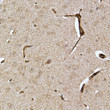
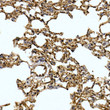


Anti-Caveolin-2 antibody (1-65) (STJ11103373)
SPECIFICATIONS
ClonalityPolyclonal
HostRabbit
ConjugationUnconjugated
IsotypeIgG
General Information
| Short Description | Rabbit polyclonal Caveolin-2 (1-65) antibody for use in WB, IHC-P, IF, ICC and ELISA in human, mouse and rat samples. Datasheet included with dilution recommendations, and related reagents. |
| Applications | WB/IHC-P/IF/ICC/ELISA |
| Host | Rabbit |
| Reactivity | Human/Mouse/Rat |
| Note | STRICTLY FOR FURTHER SCIENTIFIC RESEARCH USE ONLY (RUO). MUST NOT TO BE USED IN DIAGNOSTIC OR THERAPEUTIC APPLICATIONS. |
Product Properties
| Clonality | Polyclonal |
| Isotype | IgG |
| Conjugation | Unconjugated |
| Concentration | Lot specific |
| Purification | Affinity purification |
| Dilution Range | WB:1:500-1:1000IHC-P:1:50-1:200IF/ICC:1:50-1:200ELISA:Recommended starting concentration is 1 Mu g/mL. Please optimize the concentration based on your specific assay requirements. |
| Formulation | PBS with 0.05% Proclin300, 50% Glycerol, pH 7.3. |
| Storage Instruction | Store at-20°C for up to 1 year from the date of receipt, and avoid repeat freeze-thaw cycles. |
Target Information
| Gene Symbol | CAV2 |
| Gene ID | 858 |
| Uniprot ID | CAV2_HUMAN |
| Immunogen Region | 1-65 |
| Immunogen Sequence | MGLETEKADVQLFMDDDSYS HHSGLEYADPEKFADSDQDR DPHRLNSHLKLGFEDVIAEP VTTHS |
| Specificity | Recombinant fusion protein containing a sequence corresponding to amino acids 1-65 of human CAV2 (NP_001224.1). |
Additional Info
| Tissue Specificity | Expressed in endothelial cells, smooth muscle cells, skeletal myoblasts and fibroblasts. |
| Post Translational Modifications | Phosphorylated on serine and tyrosine residues. CAV1 promotes phosphorylation on Ser-23 which then targets the complex to the plasma membrane, lipid rafts and caveolae. Phosphorylation on Ser-36 appears to modulate mitosis in endothelial cells. Phosphorylation on both Tyr-19 and Tyr-27 is required for insulin-induced 'Ser-727' phosphorylation of STAT3 and its activation. Phosphorylation on Tyr-19 is required for insulin-induced phosphorylation of MAPK1 and DNA binding of STAT3. Tyrosine phosphorylation is induced by both EGF and insulin. |
| Function | May act as a scaffolding protein within caveolar membranes. Interacts directly with G-protein alpha subunits and can functionally regulate their activity. Acts as an accessory protein in conjunction with CAV1 in targeting to lipid rafts and driving caveolae formation. The Ser-36 phosphorylated form has a role in modulating mitosis in endothelial cells. Positive regulator of cellular mitogenesis of the MAPK signaling pathway. Required for the insulin-stimulated nuclear translocation and activation of MAPK1 and STAT3, and the subsequent regulation of cell cycle progression. |
| Protein Name | Caveolin-2 |
| Database Links | Reactome: R-HSA-9009391 |
| Cellular Localisation | NucleusCytoplasmGolgi Apparatus MembranePeripheral Membrane ProteinCell MembraneMembraneCaveolaPotential Hairpin-Like Structure In The MembraneMembrane Protein Of CaveolaeTyr-19-Phosphorylated Form Is Enriched At Sites Of Cell-Cell Contact And Is Translocated To The Nucleus In Complex With Mapk1 In Response To InsulinTyr-27-Phosphorylated Form Is Located Both In The Cytoplasm And Plasma MembraneCav1-Mediated Ser-23-Phosphorylated Form Locates To The Plasma MembraneSer-36-Phosphorylated Form Resides In Intracellular Compartments |
| Alternative Antibody Names | Anti-Caveolin-2 antibodyAnti-CAV2 antibody |
Information sourced from Uniprot.org